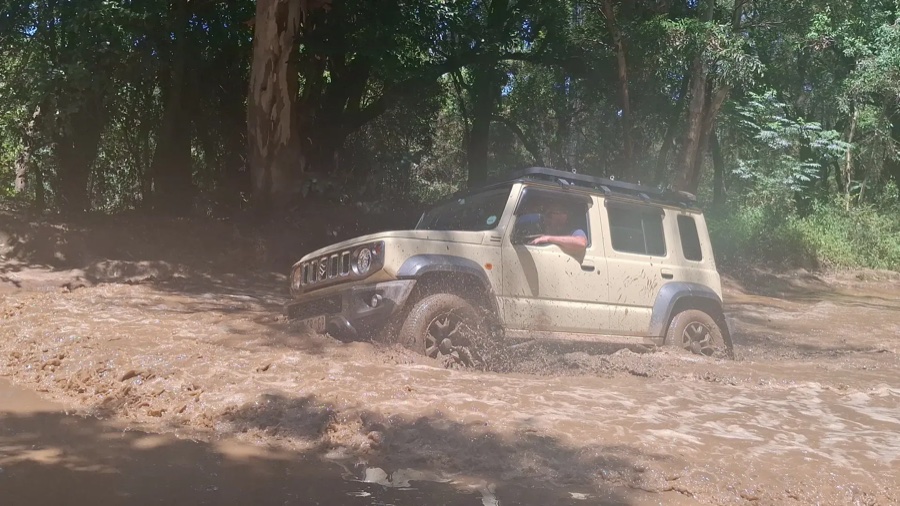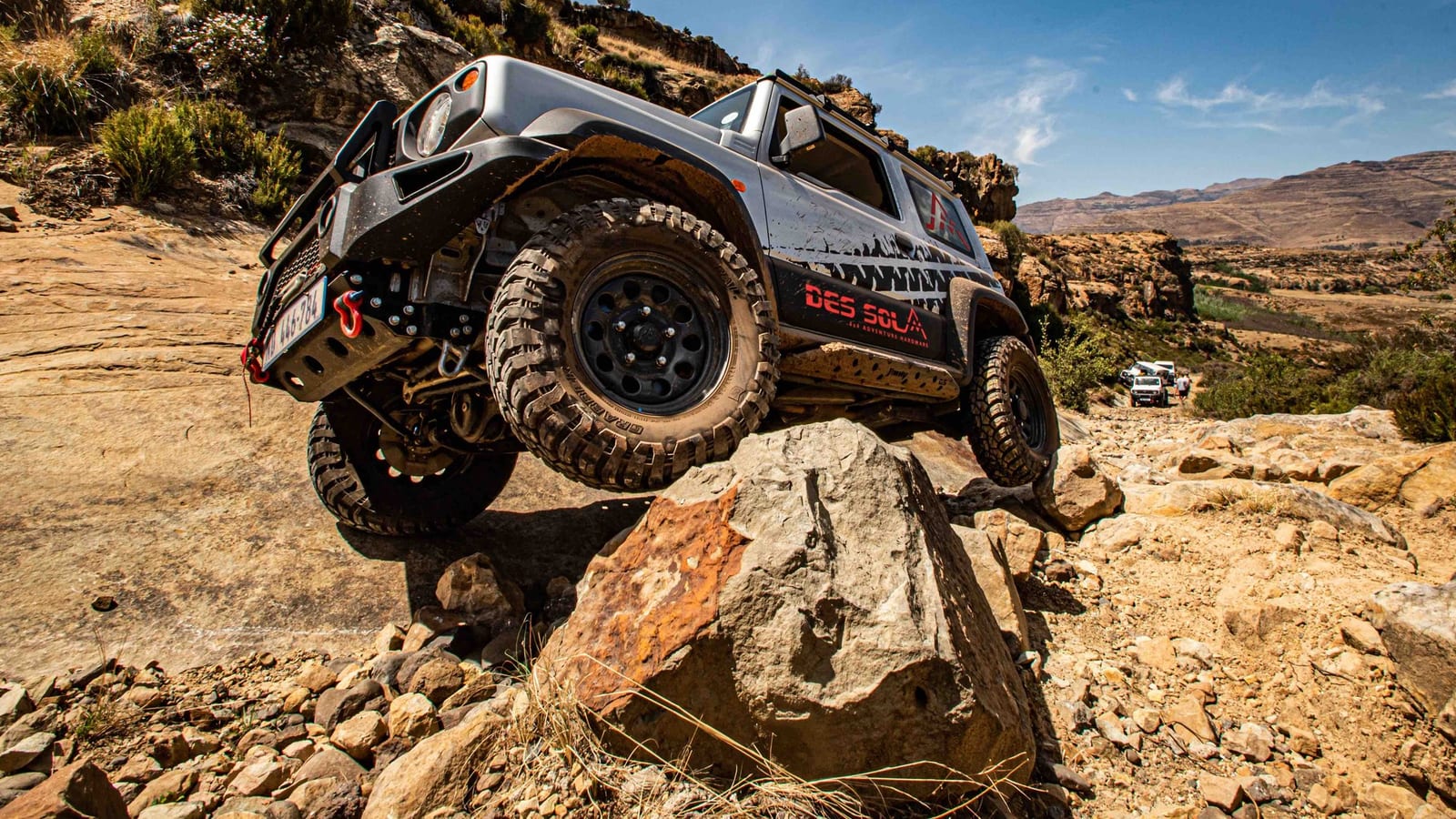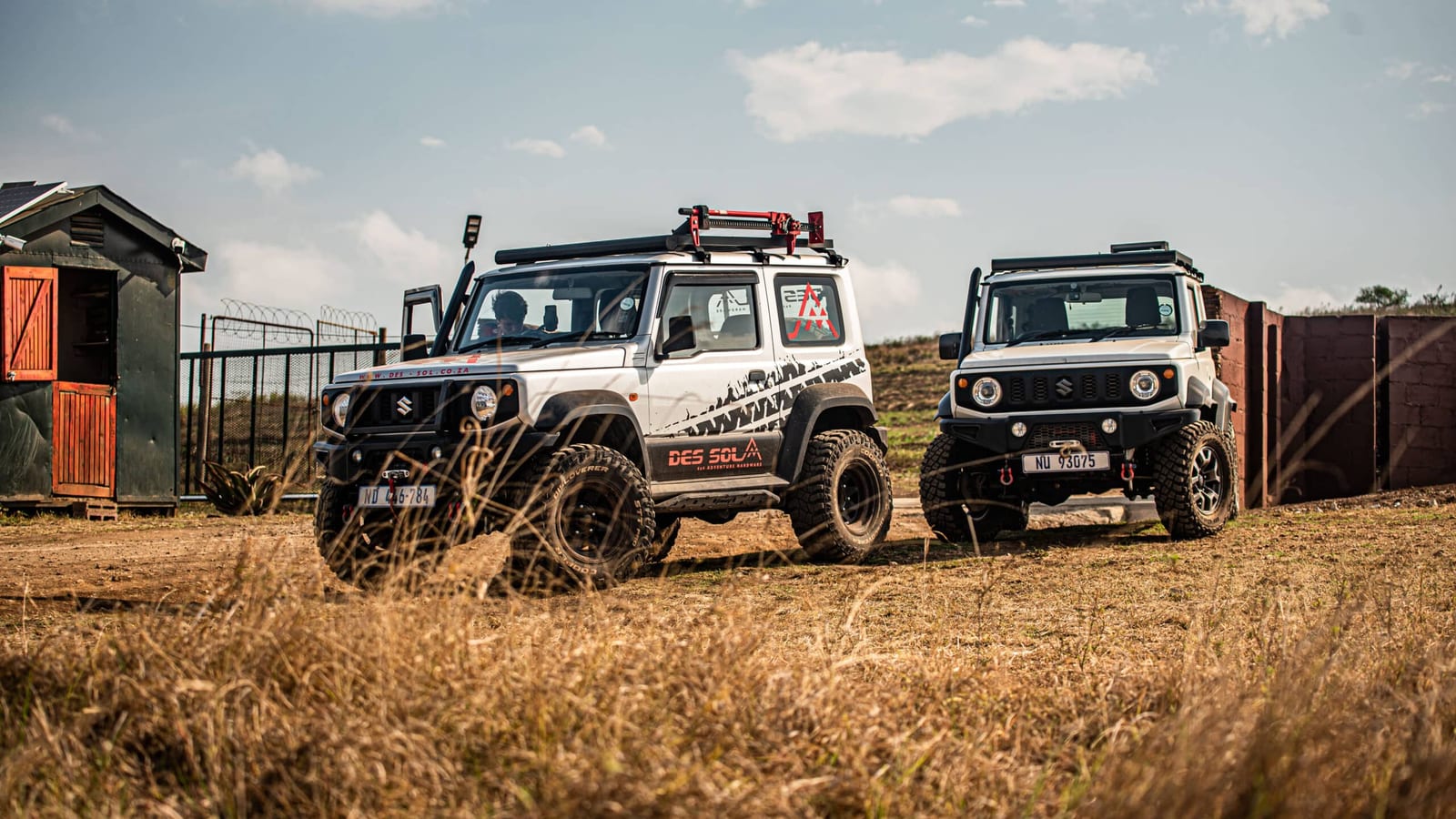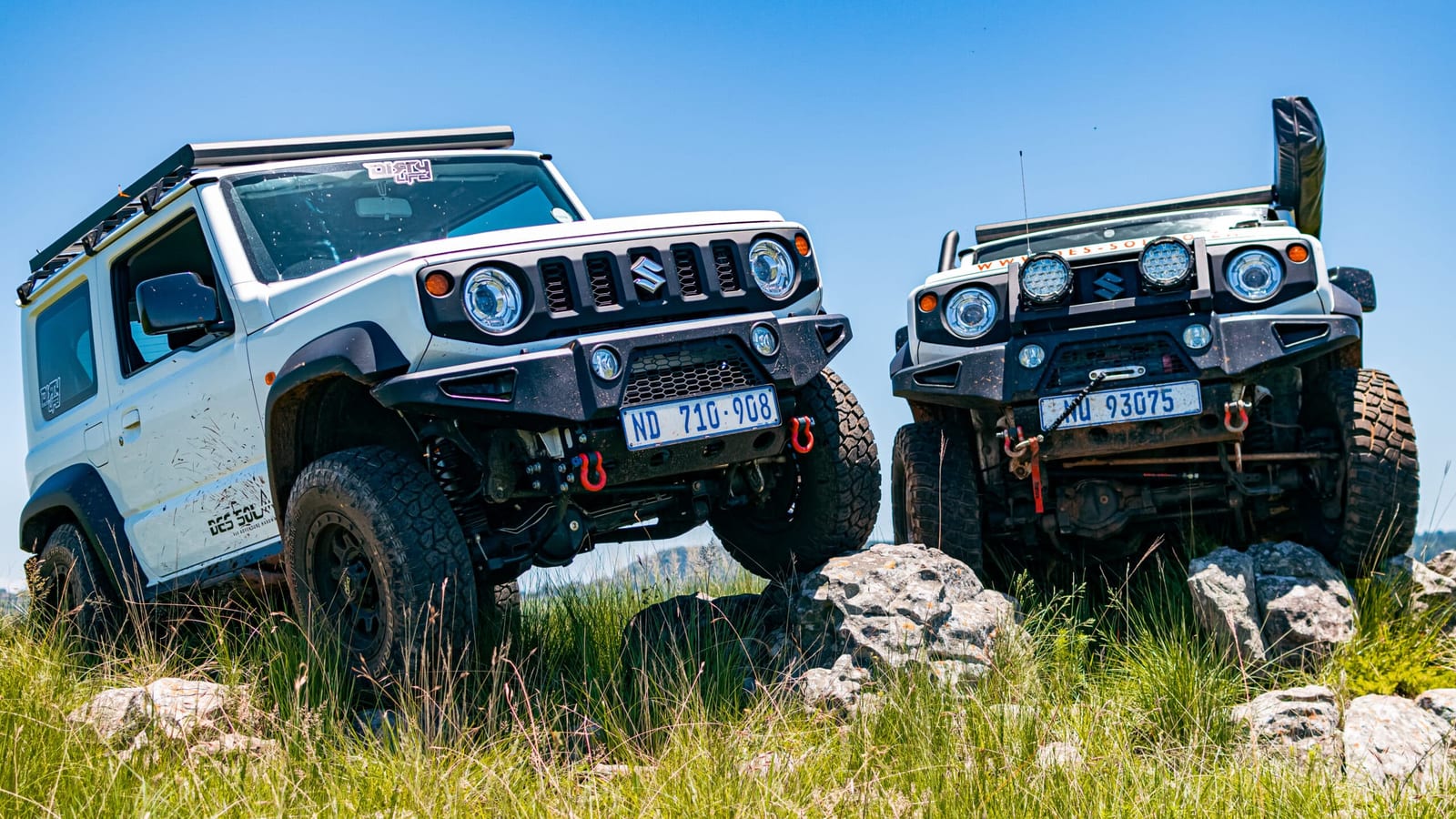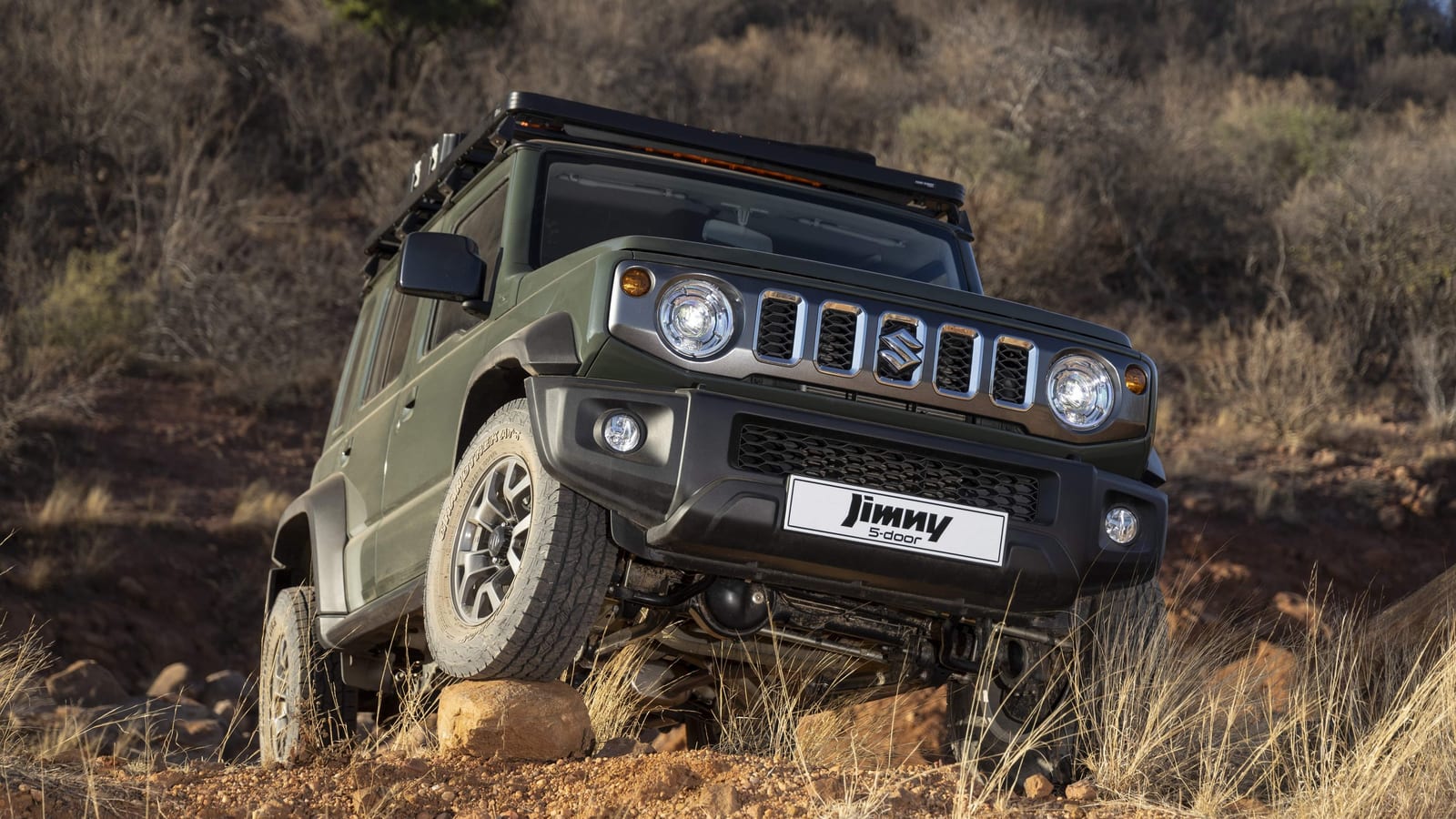
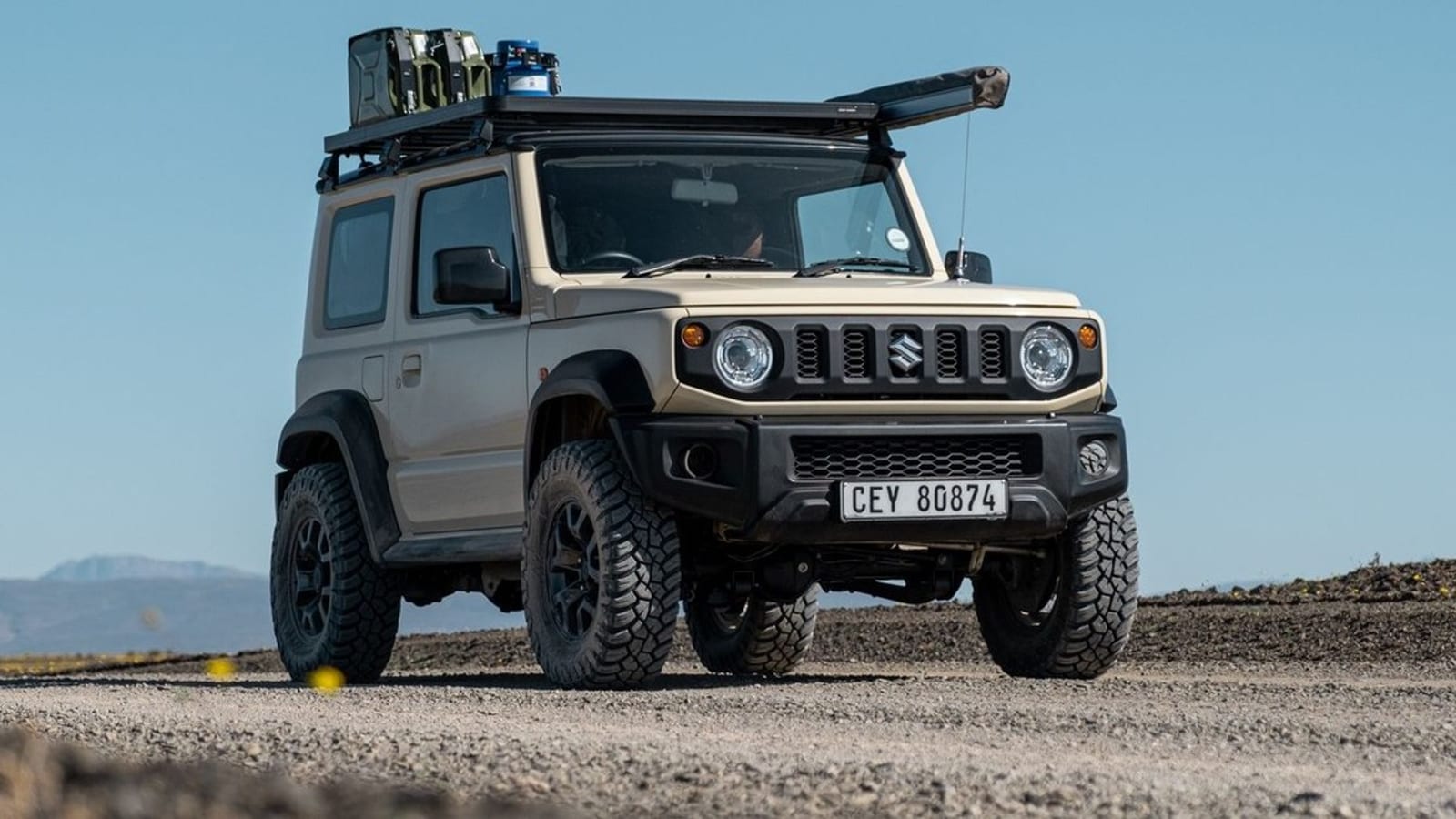
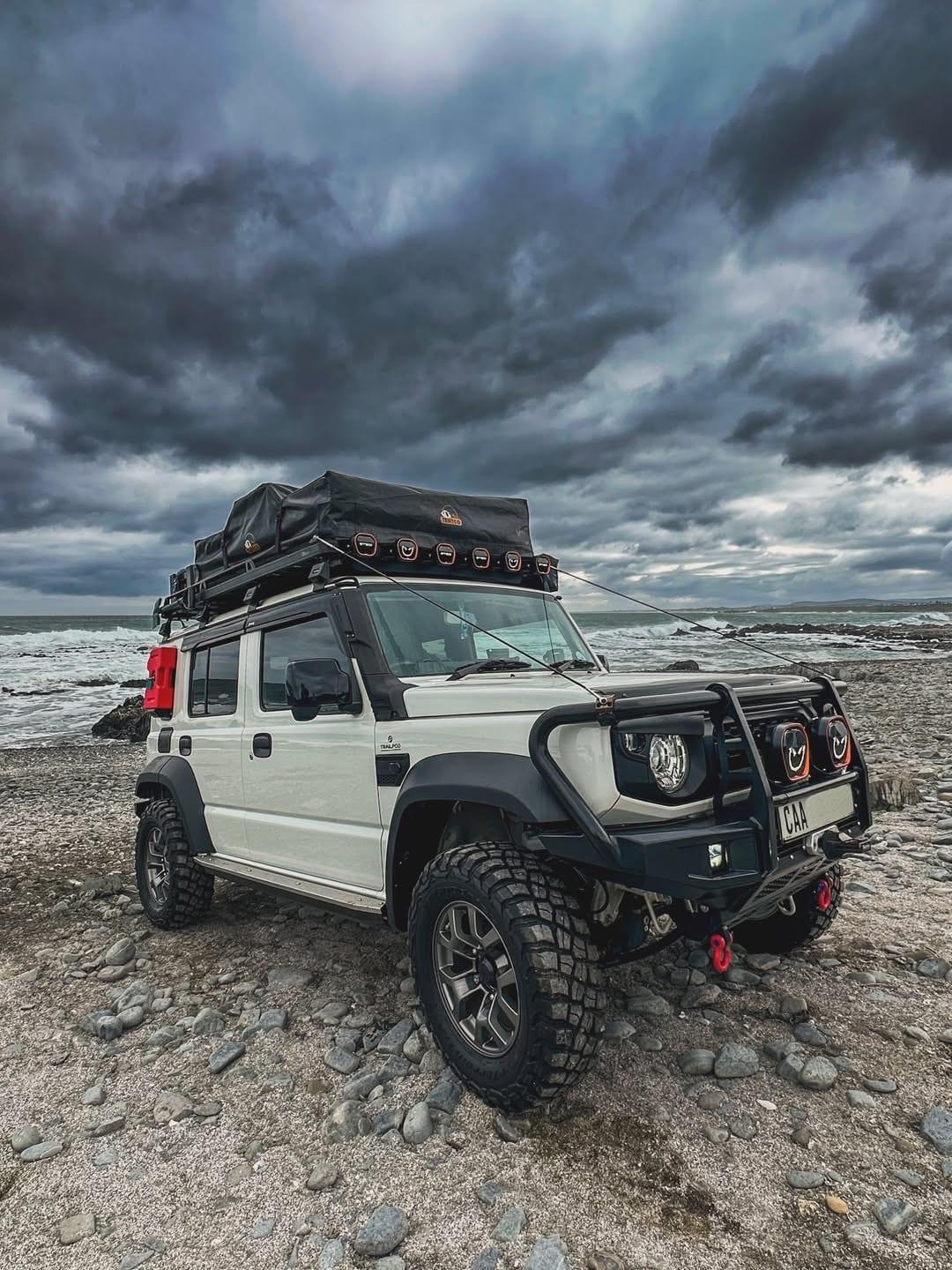
Cover photo: @stella.the.jimny, a Western Cape Jimny on General all-terrains out in the Tankwa Karoo. Go give them a follow.
Ask on any South African Jimny forum which tyres to buy, and the first reply is nearly always the same: General Grabbers, in 215/75. That advice comes from 3-door owners, 5-door owners and even owners of the older 1.3.
That answer is a good start, but it is not the whole story. A lot of the people asking are buying tyres for a partner’s or a child’s daily driver. It does mostly tar, a dirt road to a plot, and the odd weekend trip. For that car, wet grip on the highway and thorn punctures matter more than mud.
This guide covers which tyre to buy, what each one costs at SA shops today, and when you do not need new tyres at all.
The short answer
- Mostly tar, factory tyres still good: keep them. They suit SA roads better than you might think.
- Mostly tar, tyres worn out: a proper tyre in the stock 195/80 R15 size is the cheapest set of five.
- Tar plus gravel weekends: a 215/75 R15 all-terrain on your standard rims. The General Grabber AT3 is the one you will hear about most.
- Sharp rock and long trips: a tougher, dearer tyre such as the BFGoodrich KO3.
- Mud: very few Jimny owners need mud tyres. Read the section below first.
Jimny tyre size: what your car came on
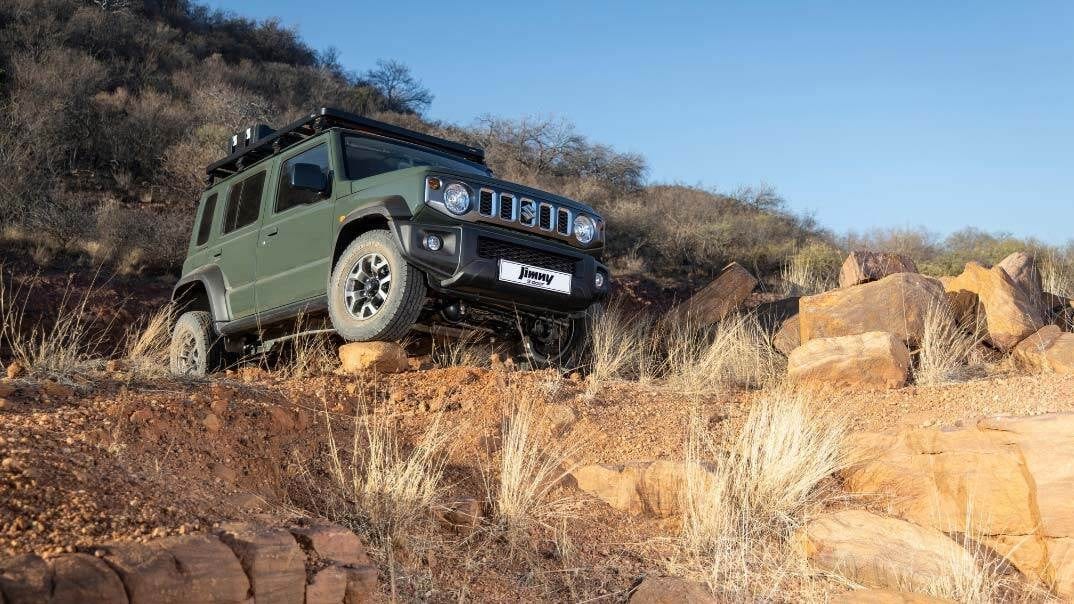
Every current Jimny sold in South Africa leaves the factory on 195/80 R15 tyres. That goes for the 3-door and the 5-door, GL and GLX. The rim is a 15-inch alloy, and there is a matching full-size spare on the back door.
| Jimny | Tyre size from the factory | Upgrade most owners make |
|---|---|---|
| Current Jimny (2018 on), 3-door and 5-door | 195/80 R15 96S | 215/75 R15, same rims |
| Older Jimny 1.3 (1998 to 2018) | 205/70 R15 95S | 215/75 R15, or stay on 205/70 |
Your own size is on the sticker inside the driver’s door and on the tyre wall.
A 215/75 tyre is about 1.5% taller than the stock tyre. So the speedo reads a touch low, and that is about it. It fits the standard rims with no lift. A few owners get a light rub at full lock when reversing.
This guide is about which tyre to buy. For the size maths, the load and speed codes and tyre pressures, see our Jimny tyre size guide. For 235s and what they take, see the bigger tyres guide.
When to upgrade from the factory tyres
You may not need new tyres yet. One SA motoring writer lived with a 5-door for months and rated the factory tyres for our roads. Their tall sidewalls suit potholes and corrugations, he found, though he warned that punctures are getting more common here. Owners call thin factory tyres “biscuits”, but one long-time owner defends them. He says they are light, good on fuel and polite on tar. They have got him through more slippery spots than he expected.
Here is when it makes sense to change:
- They are worn. The law says a tyre needs at least 1 mm of tread. It is illegal once it is worn down to the wear bars in the grooves. Grip in the wet goes well before that.
- The car slides in the wet. This is one of the most common complaints in SA Jimny tyre threads. In those threads, a better tyre is the usual fix.
- You keep getting punctures. Bushveld thorns and sharp shale find thin tyres. A tougher all-terrain resists them better.
- You bought a used Jimny on old tyres. Rubber hardens and cracks with age. Do not trust an old tyre just because it has tread.
- There is a dirt road in your life. A farm road, a plot, or gravel passes most weekends.
A tyre is illegal too if it has a bulge, or a cut down to the cords that is longer than 25 mm. Check the spare as well. It sits in the sun on the back door.
Staying on the stock size (195/80 R15)
Staying on the stock size is the cheapest way to a new set of five. The speedo stays spot on, and nothing else about the car changes. It suits a tar-first driver in Gauteng or on the coast.
But there is a trap. Ask a tyre shop for “195/80 R15” and you will be shown minibus and van tyres first. At Tiger Wheel & Tyre, 13 of the 15 tyres in this size were van tyres in September 2026. They are cheap, from R1,199. They are also built for loaded minibuses, not a light 4x4.
Ask for the code on your door sticker instead: 96S. Only two tyres on the big chains’ shelves matched it.
| Tyre | What it is | Tiger Wheel & Tyre | Supa Quick |
|---|---|---|---|
| Dunlop Grandtrek AT20 | A mild tyre made mostly for tar, with some gravel grip | R1,969 | R2,238 |
| Bridgestone Dueler H/T 684 | A highway tyre for tar | R3,389 | R2,644 |
Prices per tyre, VAT included, fitting extra, seen online on 23 September 2026. Supa Quick prices were for Gauteng North and the Western Cape.
Look at the gap. The same Bridgestone was R745 cheaper at one chain than the other.
There is no chunky all-terrain and no mud tyre in this size at the big chains. If you want either, you are really choosing to go up to 215/75.
A tip from that wet-road thread: one reply said the car’s original tyres gripped better in the wet than the replacements did. If you stay stock size, a good road tyre may beat a cheap all-terrain on wet tar.
The 215/75 all-terrains most owners fit
Step up to 215/75 R15 and the shelves fill up. Tiger Wheel & Tyre had nine tyres in this size, and every one was a 4x4 tyre. Compare that with two real Jimny tyres in the stock size.
In SA talk, “off-road tyres” mostly means all-terrains, or A/Ts. They have a tougher tread and sidewall than a road tyre, but stay civil on tar. For how they compare with highway and mud tyres, read our all-terrain tyres guide.
| Tyre | Cheapest price seen | Where | Also seen at |
|---|---|---|---|
| Nankang FT-9 | R2,650 | JimnyworX | |
| General Grabber AT3 | R2,720 | JimnyworX | R2,899, Tiger Wheel & Tyre |
| Falken Wildpeak A/T3WA | R2,786 | Supa Quick | |
| Hankook Dynapro AT2 Xtreme | R2,869 | Tiger Wheel & Tyre | |
| Bridgestone Dueler A/T 697 | R2,932 | Supa Quick | R3,189, Tiger Wheel & Tyre |
| Dunlop Grandtrek AT5 | R2,970 | Supa Quick | R3,589, Tiger Wheel & Tyre |
| Yokohama Geolandar A/T 4 | R3,199 | Tiger Wheel & Tyre | |
| Maxxis Worm Drive | R3,580 | JimnyworX | |
| BFGoodrich KO3 or KO2 | R5,639 | Tiger Wheel & Tyre |
All 215/75 R15, per tyre, VAT included, fitting extra. Prices seen online on 23 September 2026. They change, so check on the day.
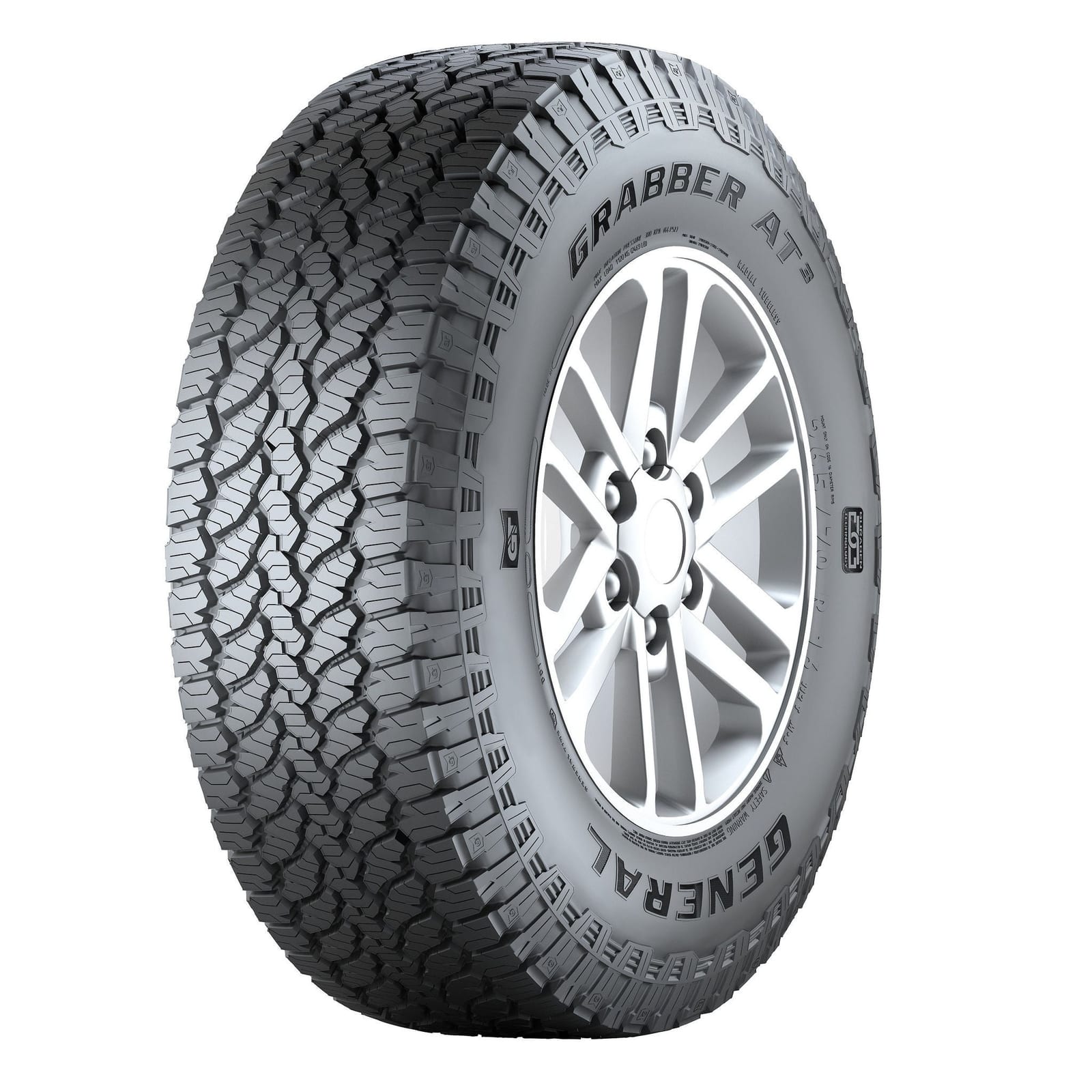
General Grabber AT3: the one you will hear about most
“Grabbers” is the first answer in nearly every SA Jimny tyre thread from 2023 to 2026. Owners of the current 3-door, the 5-door and the older 1.3 all say it. One buyer was told the same by a Jimny specialist and by a Tiger Wheel & Tyre branch.
Owners fit them to the standard rims with no lift. They say Grabbers are better than the factory tyres on tar and gravel, grip well in the wet and wear evenly. One owner said they made the car look like it was wearing hiking boots.
The Grabber is also rated to carry more than the factory tyre, and for a higher top speed. JimnyworX in Cape Town had Grabbers at R2,720, the cheapest we found. Its page just says “General Grabbers”, so ask which model you are getting.
A Durban owner had to phone shop after shop to find 215/75 Grabbers in stock. Ring before you drive over.
The other good all-terrains
Falken Wildpeak A/T3WA. The cheapest big-brand all-terrain at a national chain, at R2,786 from Supa Quick. It is a light truck build, with a stronger carcass than a car tyre. We found little SA Jimny track record for it yet.
Hankook Dynapro AT2 Xtreme. The cheapest of the nine at Tiger Wheel & Tyre, at R2,869. Hankook also sells a Dynapro AT2 at R4,279, so check the full name on the quote.
Bridgestone Dueler A/T 697. The safe mainstream middle. Supa Quick had it in stock in both regions we checked, at R2,932.
Dunlop Grandtrek AT5. This one has the best long-trip story. A southern African owner wrote up a solo Namibia trip in a current Jimny for 4x4 Afrika in 2025. The car ran 215/75 AT5s through Damaraland and the Hoanib valley with no punctures. The tyres already had about 40,000 km on them. The owner rates them as a top pick for a Jimny.
Yokohama Geolandar A/T 4. Mid price, at R3,199. It has the highest load rating of any tyre we priced, so it suits owners who tour with a full load.
Nankang FT-9. The budget look, with white letters on the sidewall. JimnyworX had it at R2,650. Check the speed letter, though (more on that below).
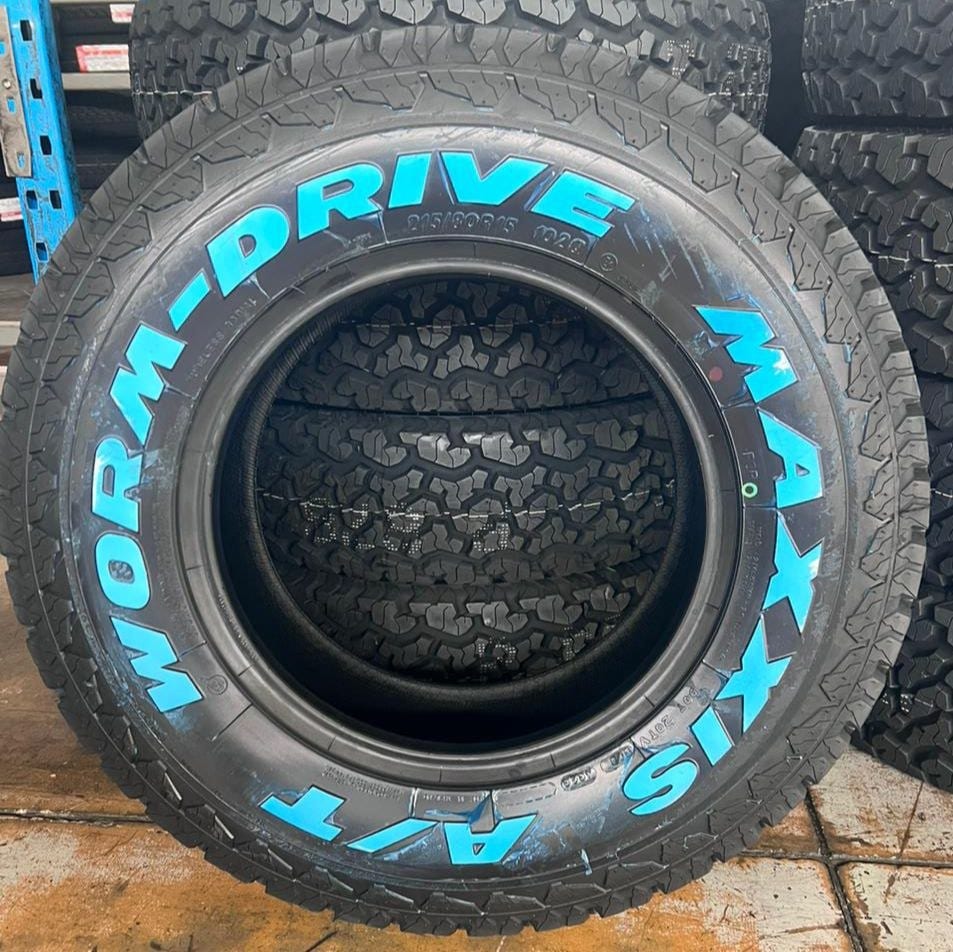
Maxxis Worm Drive: the Jimny specialist’s pick
JimnyworX is a Jimny-only workshop in Cape Town, and it keeps the Maxxis Worm Drive on the shelf. It was R3,580 a tyre in September 2026. Buying there gets you fitting advice from people who work on nothing but Jimnys. We found no SA owner reviews of this tyre on a Jimny yet, so the case rests on the shop’s choice.
BFGoodrich KO3 and KO2: the tough badge
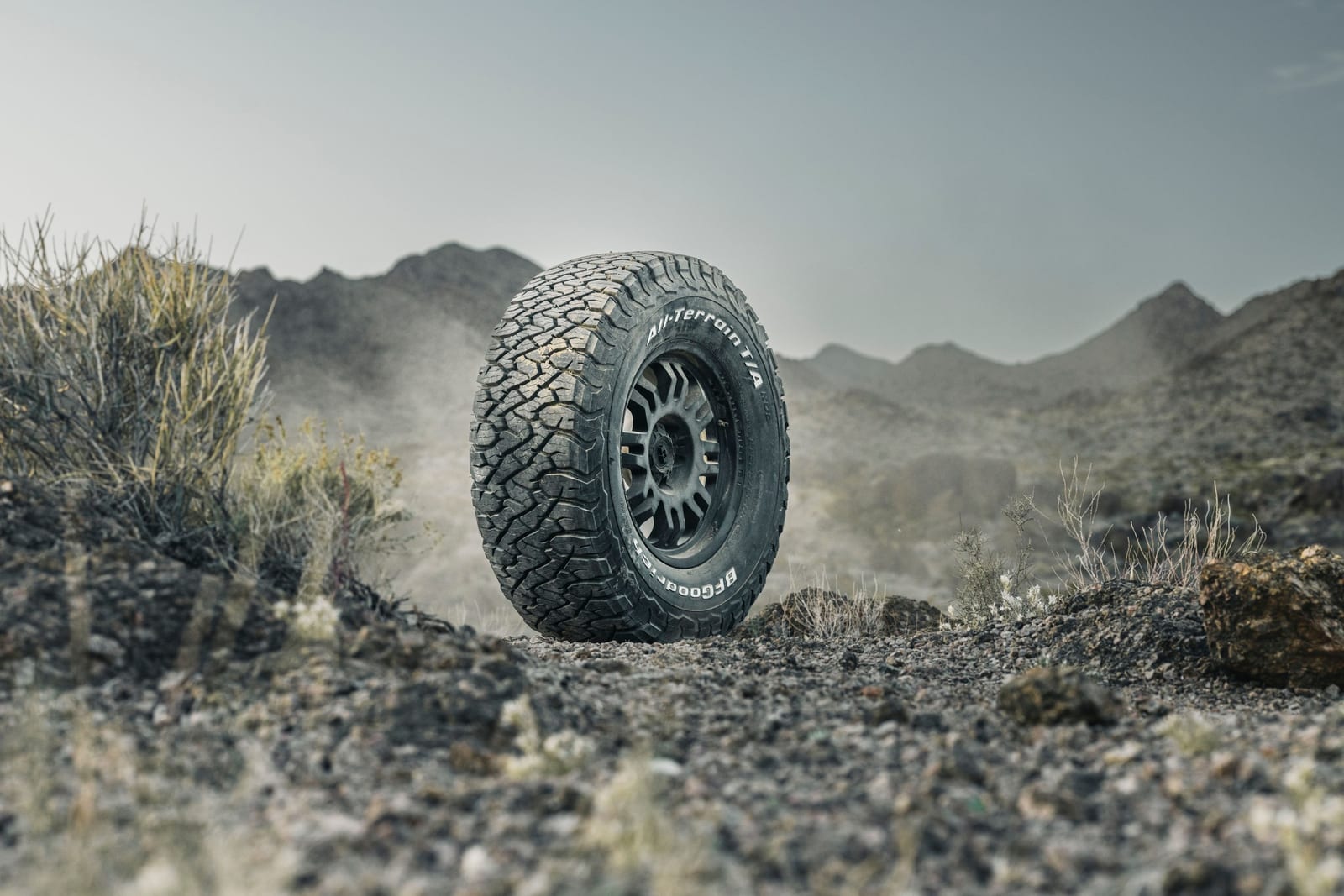
BFGoodrich has the longest name for toughness in South Africa. Owners have talked about its strong sidewalls and fewer punctures for years. The same threads say it is heavy and loud, and not great in the wet on a light car.
A heavy tyre matters on a 1.5-litre car. Owners say it dulls the Jimny on the open road. So the most expensive tyre is not the automatic choice here.
The KO3 is taking over from the KO2. It launched in SA in October 2024. BFGoodrich says it wears 15% better than the KO2. It also says the KO3 is 20% tougher on gravel. Those are the maker’s claims, not our tests. Both cost R5,639 a tyre at Tiger Wheel & Tyre, so buy the newer KO3 unless you want the old look.
That is about double the price of a Grabber. It makes sense for sharp rock: the Baviaanskloof, the Richtersveld, or a long Namibia trip.
Jimny off-road tyres: do you need mud tyres?
Almost certainly not. Locals call mud tyres “muddies”. They have big open blocks for mud and wet clay, and they are loud on tar.
There is no mainstream mud tyre in the stock 195/80 size at the big chains. In 215/75 there is one: the BFGoodrich KM3, at R5,989 from Tiger Wheel & Tyre. More choice opens up in 235, which is a lift and a build, not a tyre swap. Our bigger tyres guide covers that route.
One current Jimny owner has run 235 mud tyres for over 100,000 km. He loves them off-road. On tar and in the wet he rates them poorly, and his fuel use went up a lot. His advice to most people is still 215 all-terrains.
Check the letters on the quote
Every tyre has a code after the size, like 96S. The number is how much weight each tyre may carry. The letter is its top speed. Match or beat the code on your door sticker. Our tyre size guide explains the codes in full.
Two things to watch for:
- A lower speed letter. The factory S is good for 180 km/h. The Nankang FT-9 and the BFGoodrich KM3 carry a Q, which is 160 km/h. That is above the 5-door’s claimed top speed of 145 km/h, and it is legal as long as you stay under 160. But tyre shops advise you to match the factory letter or beat it.
- Van tyres in the stock size. Their load number is far higher than a Jimny needs. They are built for minibuses, so ask for a 4x4 tyre.
Every 215/75 all-terrain in the table above carries an S or better, with two exceptions. The Nankang is a Q. The Maxxis shop page gives no code, so ask before you pay.
What a set really costs
A Jimny has five wheels, and the spare is full size. In four-wheel drive the front and rear axles turn together. So if you change size, a spare of the old size puts strain on the drivetrain. Buy five. Many owners rotate all five, so the spare wears with the set. Tiger Wheel & Tyre says to rotate every 8,000 to 10,000 km.
| Tyre | Size | Five tyres, before fitting |
|---|---|---|
| Dunlop Grandtrek AT20 | 195/80 R15 | about R9,845 |
| Bridgestone Dueler H/T 684 | 195/80 R15 | about R13,220 |
| General Grabber | 215/75 R15 | about R13,600 |
| Falken Wildpeak A/T3WA | 215/75 R15 | about R13,930 |
| Dunlop Grandtrek AT5 | 215/75 R15 | about R14,850 |
| Maxxis Worm Drive | 215/75 R15 | about R17,900 |
| BFGoodrich KO3 | 215/75 R15 | about R28,195 |
| BFGoodrich KM3 (mud) | 215/75 R15 | about R29,945 |
Cheapest price we saw for each tyre on 23 September 2026, times five.
Then add fitting and balancing. The price site TyreCompare puts that at about R180 to R300 a tyre. A quote for “a set” is often for four tyres, so ask for five.
Where to buy Jimny tyres in SA
Jimny tyres are for sale at the national chains, at Jimny specialists and at independent tyre shops. Stock changes from branch to branch, so phone around.
- Tiger Wheel & Tyre shows prices online and lets you book fitting at a branch. It had the widest range of 215/75 all-terrains we found.
- Supa Quick has an online shop with prices and stock by region. It was cheaper than Tiger Wheel & Tyre on three of the four tyres both sold.
- JimnyworX SA in Cape Town sells Grabbers, Nankangs and Maxxis tyres, and knows the car inside out.
- Independent tyre shops matter too. Durban owners name Tyremart Pinetown and Errol’s Tyres for Grabbers.
Get at least two quotes. On one tyre, the gap between chains was R745. TyreCompare is a handy check before you pay.
For tyre gadgets like pressure sensors, see our wheels and tyres page. The accessories guide covers what to fit after tyres.
Who should buy what
| You | Buy | Five tyres, about |
|---|---|---|
| Tar-first, factory tyres still good | Nothing yet | R0 |
| Tar-first, tyres worn, keep it stock | Dunlop Grandtrek AT20, 195/80 | R9,845 |
| Tar-first, want a quieter road tyre | Bridgestone Dueler H/T 684, 195/80 | R13,220 |
| Tar plus gravel weekends (most owners) | General Grabber AT3, 215/75 | R13,600 |
| Same, but a big brand at a chain | Falken Wildpeak or Bridgestone Dueler A/T, 215/75 | R13,930 to R14,660 |
| Long gravel trips | Dunlop Grandtrek AT5, 215/75 | R14,850 |
| Buy and fit at a Jimny specialist | Maxxis Worm Drive, 215/75 | R17,900 |
| Sharp rock, want the toughest name | BFGoodrich KO3, 215/75 | R28,195 |
| Proper mud (very rare) | BFGoodrich KM3, 215/75 | R29,945 |
Thinking about a lift as well? Read the lift kits guide first. Most owners do not need one for 215s.
The older Jimny (1998 to 2018)
The older Jimny 1.3 runs 205/70 R15, and you do not have to upsize to get a proper all-terrain. Tiger Wheel & Tyre had at least four in the stock size.
| Tyre | 205/70 R15, per tyre |
|---|---|
| Dunlop Grandtrek AT5 | R2,179 |
| Yokohama Geolandar A/T G015 | R2,679 |
| General Grabber AT3 | R2,859 |
| Bridgestone Dueler A/T 002 | R2,959 |
Prices seen at Tiger Wheel & Tyre on 23 September 2026.
Owners of the older car who drive mostly on tar often stay on 205/70. They say bigger tyres make the 1.3 feel slow. For 215s on an older Jimny, see the tyre size guide.
The bottom line
For most SA Jimnys, the answer is a 215/75 R15 all-terrain on the standard rims, and the Grabber is where most owners start. If you mostly drive on tar and your tyres are healthy, keep them. If they are worn, a good stock-size tyre is the cheapest set of five. Pay BFGoodrich money only if you really drive on sharp rock. Whatever you buy, buy five, check the letters on the quote, and phone around.
The Jimny’s small, light build is a big part of why it goes so far off-road on modest tyres, as we cover in is the Jimny a good 4x4?. Still choosing a car? See the Jimny price guide, the 3-door vs 5-door guide and our live market data. Browse Jimnys for sale, or check what yours is worth.
A big thank you to the people whose photos made this guide: @stella.the.jimny and @lostoost for their builds. Thanks to JimnyworX SA for the shop shot, and to General Tire South Africa, BFGoodrich and Suzuki Auto South Africa for theirs. Go and give them a follow, and support the local shops that keep SA’s Jimnys rolling.