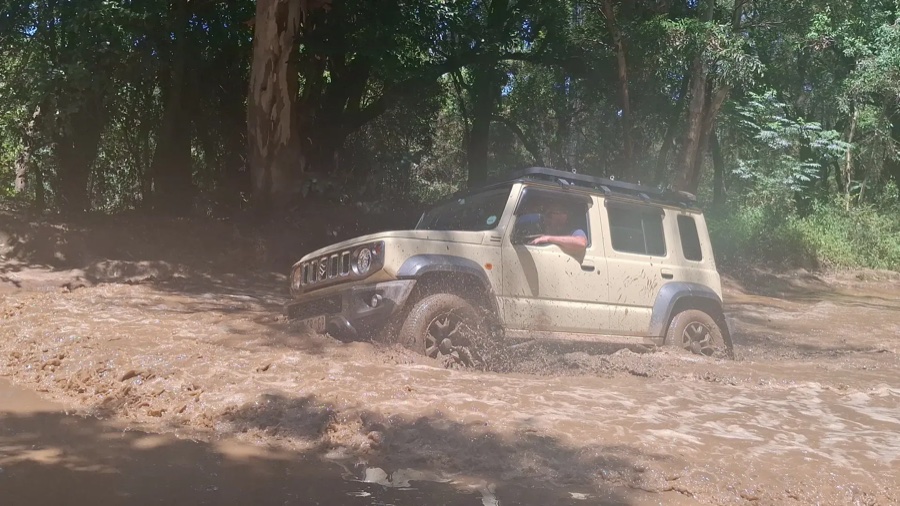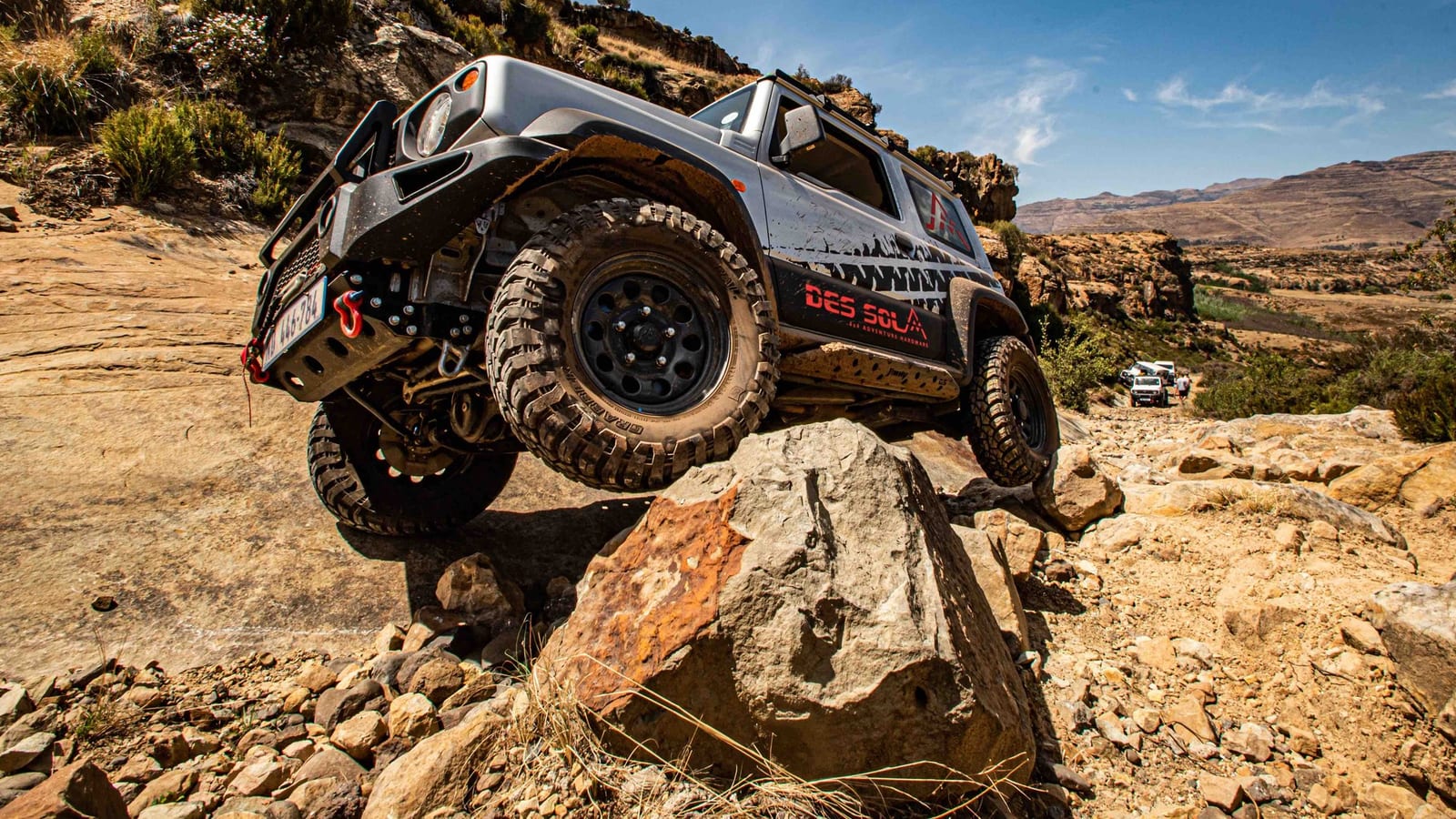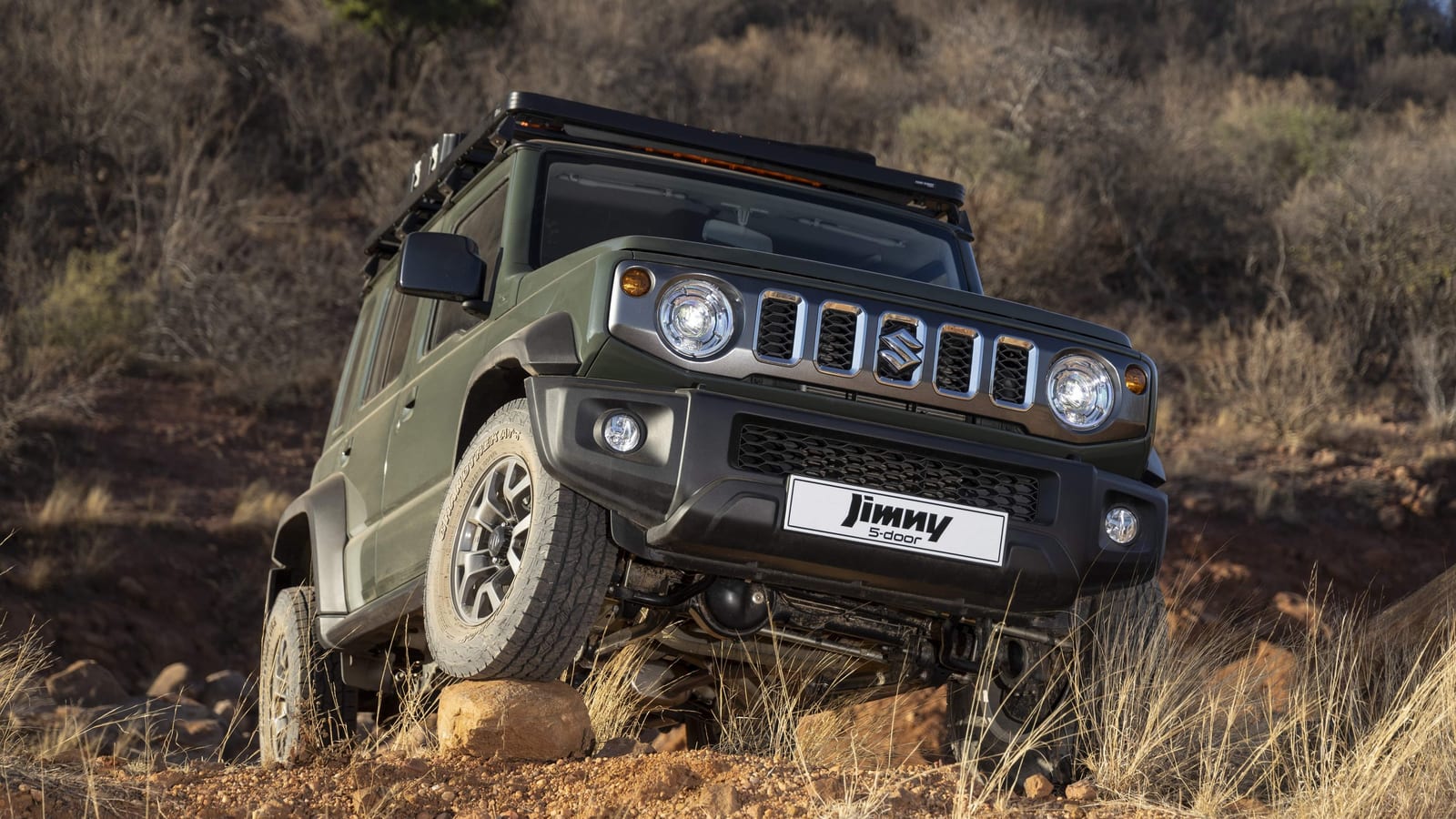
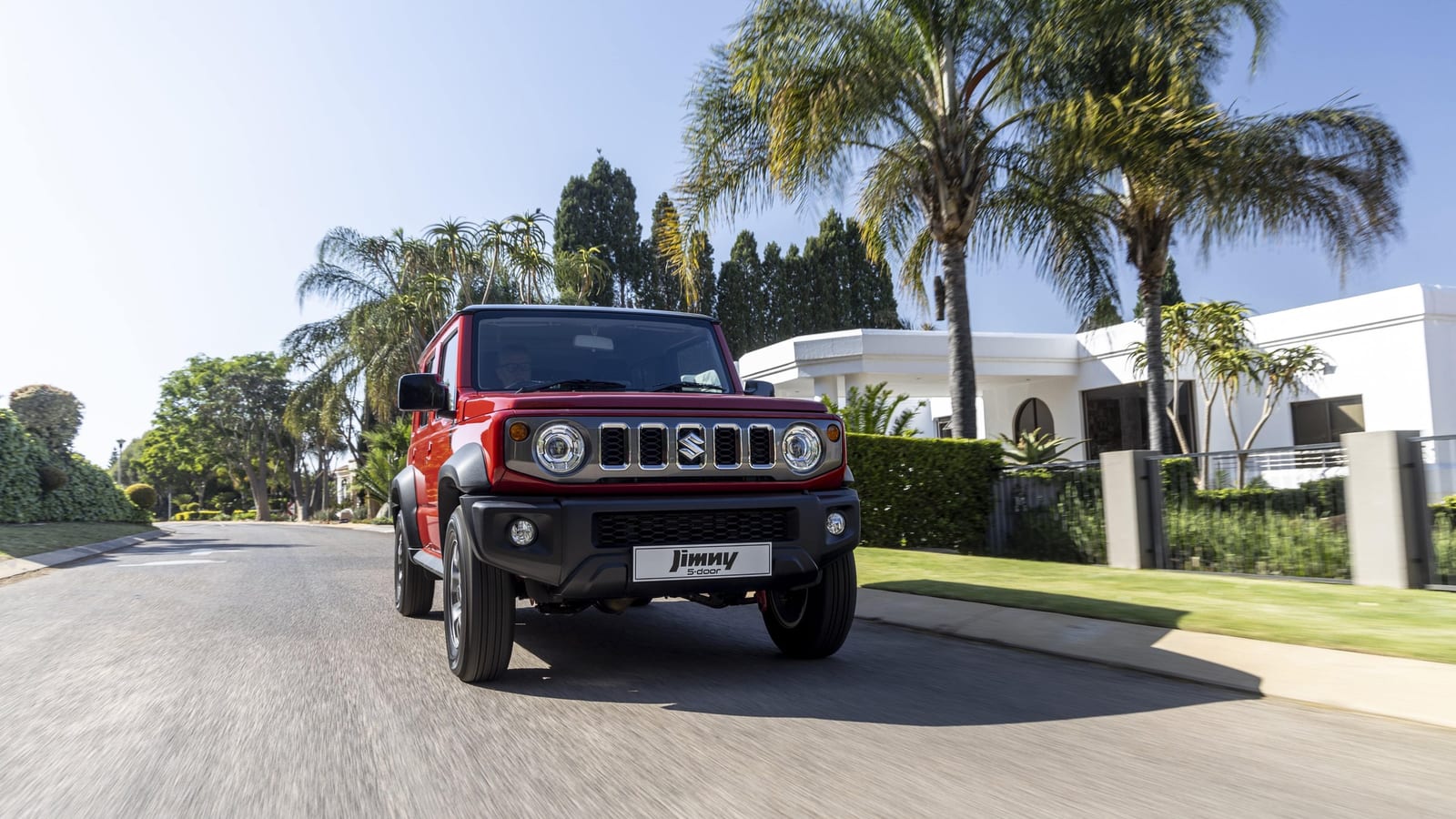
Cover photo: Suzuki Auto South Africa, with thanks. A brand new 5-door, exactly as the showroom sells it.
A new Suzuki Jimny costs from R439,900 to R489,900 at Suzuki’s list price. On live listings, new ones usually ask R30,000 to R40,000 less. A used current Jimny asks about R350,000. An older 1.3 asks about R190,000.
That is a lot of money for a small car, and plenty of South Africans say so. What the money buys is low range, a proper ladder chassis and, on a new car, a five-year warranty. It is one of the cheapest new ways to get all three in South Africa.
This guide covers what Suzuki charges, what new and used Jimnys really ask, and what moves the price. Well over a thousand Jimnys are for sale on any given day, and we analyse their asking prices daily. Every figure here is from September 2026.
The short answer
| You want | Suzuki’s list price | Typical ask on live listings |
|---|---|---|
| The cheapest new Jimny (5-door GL manual) | R439,900 | About R405,000 |
| A new 3-door (GLX) | R444,900 to R481,900 | About R407,000 (manual) to R438,000 (auto) |
| A new 5-door GLX | R467,900 to R489,900 | About R435,000 (manual) to R460,000 (auto) |
| A used current Jimny (2018 on) | Used only | About R350,000 |
| A used older 1.3 (2008 to 2018) | Used only | About R190,000 |
List prices seen on Suzuki Auto South Africa’s website on 23 September 2026. Asking prices on live listings, September 2026.
New Jimny prices from Suzuki
These are Suzuki’s own list prices, VAT included, as seen on its website on 23 September 2026.
| Body | Version | List price | Airbags |
|---|---|---|---|
| 5-door | GL manual | R439,900 | 2 (front only) |
| 3-door | GLX manual | R444,900 | 6 |
| 3-door | GLX manual with DSBS II | R459,900 | 6 |
| 3-door | GLX auto | R466,900 | 6 |
| 5-door | GLX manual | R467,900 | 6 |
| 3-door | GLX auto with DSBS II | R481,900 | 6 |
| 5-door | GLX auto | R489,900 | 6 |
Every new Jimny has the same 1.5 petrol engine, with 75 kW. Every one has 4x4 with low range, the extra-low gears for steep and rough ground.
A few things catch people out:
- The cheapest new Jimny is a 5-door. The 5-door GL manual is R5,000 under the cheapest 3-door. Most people expect it the other way round.
- The 3-door is now GLX only. Suzuki dropped the GA and GL 3-doors in March 2026. The update added six airbags and a bigger screen. It also put the price up by R8,000.
- An auto costs R22,000 more than a manual, on either body.
- The 5-door GL is manual only. If you want a 5-door auto, you are buying the GLX.
- DSBS II is a R15,000 safety pack on the 3-door. It adds automatic emergency braking and a lane warning. It is the only Jimny that can brake for you.
- The cheapest Jimny has two airbags. The cheapest one with six is the 3-door GLX manual.
Every new Jimny comes with a five-year or 200,000 km warranty. It also has a four-year or 60,000 km service plan. Locals count both as part of the price, and they are right to. Our GLX vs GL guide covers what the extra money buys.
Suzuki’s website shows prices “from”, and it does not say what that leaves out. Ask the dealer for the full drive-away price, with every fee on it.
What new Jimnys really ask
Suzuki’s price is where the haggling starts. New Jimnys on dealer adverts usually ask well under list.
| New Jimny (2026 model, under 1,000 km) | List price | Typical ask | Adverts | Under list by |
|---|---|---|---|---|
| 5-door GL manual | R439,900 | R405,000 | 52 | About R35,000 |
| 3-door GLX manual | R444,900 | R407,000 | 82 | About R38,000 |
| 3-door GLX auto | R466,900 | R438,000 | 122 | About R29,000 |
| 5-door GLX manual | R467,900 | R435,000 | 83 | About R33,000 |
| 5-door GLX auto | R489,900 | R460,000 | 169 | About R30,000 |
Asking prices on live listings, September 2026. The 3-door rows mix cars with and without the DSBS II pack, because few adverts say which.
Why so far under? There is plenty of stock. A new Jimny advert has typically been up for about three months. Compare that with the launch in November 2018, when the first two shipments sold out. The long waits of the early years are over, for now.
This is the advertised price only. We cannot see the final deal, the trade-in offer or which extras come with the car. Some “new” cars may be demo models with a few hundred kilometres on them. Ask.
Three things to check before you sign:
- Airbags on a 2026 3-door. Some 2026 3-doors on sale may have been built before the March update. Those have two airbags and the smaller screen. Ask for the six-airbag car if that matters to you.
- Extras in the price. About twenty new 5-doors ask over R500,000. That is dealer extras or a full build, not the car. Ask what is fitted, and price it against our accessories guide.
- Three quotes. Get the drive-away price from three dealers, in writing.
How far the new price has climbed
| When | Cheapest Jimny | 3-door GLX manual | Cheapest 5-door |
|---|---|---|---|
| November 2018 (launch) | R264,900 (3-door GA) | R299,900 | Not sold yet |
| November 2023 (5-door launch) | R390,900 (3-door GL) | R416,900 | R429,900 |
| September 2026 | R439,900 (5-door GL) | R444,900 | R439,900 |
Suzuki list prices at each date.
The 3-door GLX manual cost R299,900 at launch in 2018. Today it costs R444,900. That is about half as much again in eight years.
This matters to used buyers too. A used Jimny is priced against today’s new price, not the old one. That is a big reason why old Jimnys still ask so much. Our price by year guide shows what every year asks now.
Used Jimny prices
Two very different Jimnys share the used market. The older 1.3 was sold new here from 2008 to 2018. The current Jimny, with the 1.5 engine, arrived in November 2018. The 5-door joined it in late 2023.
| Used Jimny | Adverts | Most ask between | Typical ask | Typical km |
|---|---|---|---|---|
| Older 1.3 (2008 to 2018) | 193 | R131,000 and R239,000 | R190,000 | 125,000 |
| Current 3-door, 2018 to 2022 | 402 | R280,000 and R350,000 | R310,000 | 59,000 |
| Current, 2023 on, body not stated (mostly 3-doors) | 182 | R320,000 and R400,000 | R360,000 | 29,000 |
| Current 5-door, 2023 on | 345 | R340,000 and R420,000 | R375,000 | 32,000 |
Asking prices on live listings, September 2026. “Most ask between” leaves out the cheapest and dearest tenth, where the odd typing error and wreck live.
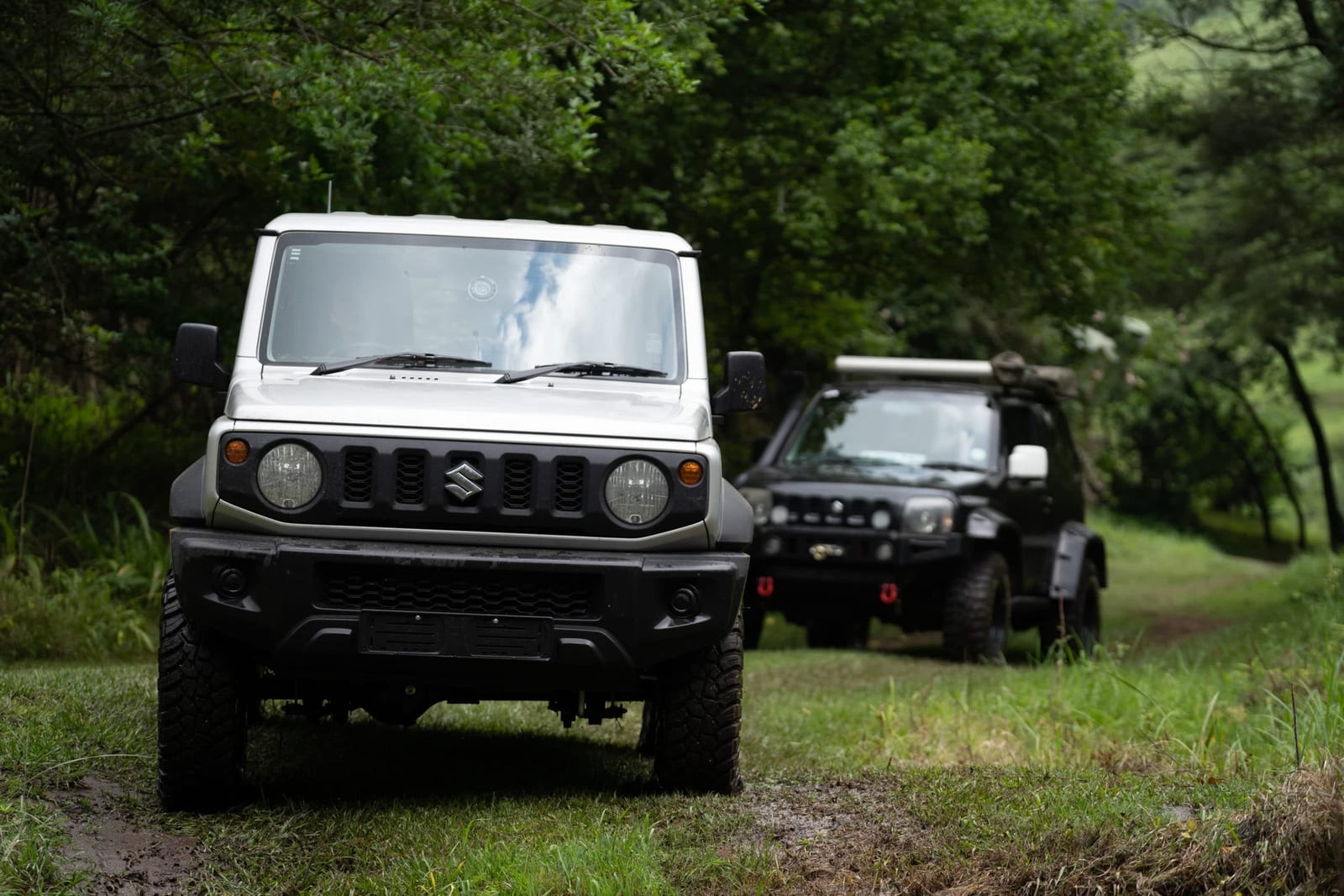
The older 1.3
Suzuki sold 9,232 of the older Jimny in South Africa from 2008 to 2018. That is not many, so good ones stay in demand. It is the cheapest way into a real Jimny, with the same ladder chassis and low range.
| Older 1.3 | Adverts | Typical ask | Typical km |
|---|---|---|---|
| 2008 to 2012 | 46 | R147,000 | 181,000 |
| 2013 to 2015 | 64 | R180,000 | 126,000 |
| 2016 to 2018 | 83 | R216,000 | 103,000 |
Most on sale are manuals. Automatics are scarce, about one in seven, and they tend to ask more. Expect high kilometres on most of them. Our common problems guide covers what to check on an older car.
The current 3-door
This is the biggest part of the market. A 2018 to 2022 3-door asks about R310,000. Nearly all of them are GLX models. A GA or GL usually asks R20,000 to R45,000 less than a GLX of the same year.
Watch the airbags. Every 3-door built before March 2026 has two front airbags, not six. Price it as the car it is.
The 5-door
A used 5-door asks about R375,000. It only looks dearer because every 5-door is from 2023 or later. Against a 3-door of the same year, it asks about the same. Our 3-door vs 5-door guide helps you choose between them.
What your budget buys
| Your budget | What you are looking at | Adverts in this band |
|---|---|---|
| Under R150,000 | Older 1.3, 2008 to 2012, usually over 150,000 km | 50 |
| R150,000 to R200,000 | Older 1.3, 2013 to 2016 | 75 |
| R200,000 to R250,000 | The best older 1.3s, 2016 to 2018, and a few high-km current Jimnys | 74 |
| R250,000 to R300,000 | Current 3-door, 2019 to 2021, often 60,000 km plus | 188 |
| R300,000 to R350,000 | Current 3-door, 2021 to 2023, or the odd early 5-door | 355 |
| R350,000 to R400,000 | 2023 to 2024 3-door or 5-door, used | 394 |
| R400,000 to R450,000 | New, or a used 2025 | 423 |
| Over R450,000 | New top versions, or cars with extras | 210 |
Live listings, September 2026. Counts are adverts, and some cars are listed more than once. Ranges are rounded.
Under R250,000 you are shopping the older 1.3. Around R250,000 the two Jimnys meet, and there are few of either. You can buy one of the best late 1.3s. Or you can buy one of about ten current Jimnys under R250,000, all with high kilometres. The cheapest had 111,000 km on it. That is a real choice: a newer design with a lot of kilometres, or an older one that has done less.
From R400,000 up, new cars outnumber used ones by about nine to one. At that money, look at new stock first.
What moves the price
The year matters less than you think. Kilometres matter more.
| What changes | Rough effect on the asking price |
|---|---|
| Generation (older 1.3 or current Jimny) | About R160,000 between typical asks |
| New or used | About R90,000 between typical asks |
| Kilometres (2022 car, under 30,000 km v over 100,000 km) | About R65,000 |
| One model year older | R25,000 to R30,000 on newer cars; about R10,000 on older ones |
| Trim (GA or GL 3-door v GLX, same year) | R20,000 to R45,000 |
| Auto v manual | Up to about R20,000 used; R22,000 new |
| Body (3-door v 5-door, same year, used) | About the same |
| Province | Very little |
| Extras (lift, big tyres, roof rack) | Little, and far less than they cost |
Live listings and Suzuki list prices, September 2026.
Here is how kilometres move the price on one year of car. We picked 2022 because it has the most used adverts.
| 2022 current Jimny, used | Adverts | Typical ask |
|---|---|---|
| Under 30,000 km | 40 | R340,000 |
| 30,000 to 60,000 km | 71 | R320,000 |
| 60,000 to 100,000 km | 58 | R310,000 |
| 100,000 km and up | 16 | R274,500 |
So compare cars by kilometres and condition first, then by year.
Where the car is makes little difference. Gauteng and the Western Cape simply have the most choice, with 630 of the 929 used current Jimnys on offer.
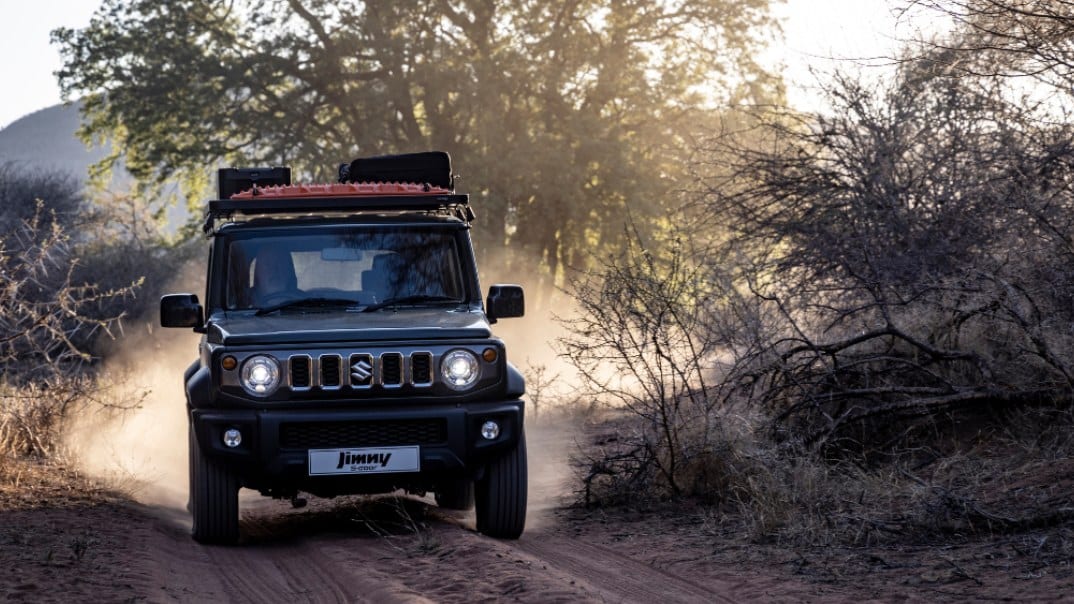
Extras are the trap. A lift kit costs R18,000 to R35,000 or more. Buyers do not pay that back. Fit a lift kit or a roof rack because you want it, not to add value. When you buy, price the car, not the extras.
Asking is not paying
Every price in this guide is an asking price. What a car sells for is usually less, and the trend is down.
| Last 90 days | Price changes | Share that were cuts | Typical cut |
|---|---|---|---|
| Current Jimny, used | 1,193 | 84% | R10,000 |
| Current Jimny, new and near-new | 580 | 58% | R10,000 |
| Older 1.3 | 450 | 79% | R5,000 |
Price changes on live listings, the 90 days to 23 September 2026.
Most sellers who changed their price cut it. So there is room to haggle, on used cars most of all. Expect a dealer’s trade-in offer to come in lower again.
Be wary of a clean, low-kilometre current Jimny that asks far under the going rate for its year. Find out why before you pay a deposit, and never pay for a car you have not seen.
Is a Jimny worth the money?
It depends what you compare it with. The Jimny is small, slow on the highway and short on boot space. A 3-door holds 85 litres behind the back seats. For a family car, look elsewhere.
But as a 4x4, it is one of the cheapest new ones in South Africa with a ladder chassis and low range. The off-road SUVs we checked cost a lot more. The Jetour T2 starts at R569,900, about R130,000 more than the cheapest Jimny. The GWM Tank 300 costs more again.
Locals also weigh a new Jimny against a used bigger 4x4 for the same money. A used Fortuner or Pajero gives you more space. It also comes with someone else’s kilometres and someone else’s problems. Plenty of buyers pick the new Jimny for exactly that reason.
The best value sits in the middle. A used 5-door GLX auto asks about R380,000. That is about R80,000 under a new one on dealer adverts. The first owner has paid the biggest drop. Ask the seller how much of the warranty and service plan is left. Our resale value guide shows how well Jimnys hold their money.
Before you buy
- Pick your Jimny by budget. Under R250,000 means the older 1.3. Over that, choose the 3-door or 5-door, GL or GLX, and manual or auto.
- Compare like with like. Check a car against others of the same generation, body and kilometres. The live Jimny market page shows today’s asking prices, and our monthly Jimny Price Index tracks the trend.
- Value the car. Our Jimny valuation tool reads the generation, body and trim. It does not price auto against manual, so compare an auto with other autos.
- Work out the monthly cost. Every Jimny listing has a finance calculator. Monthly figures in adverts often rest on a big final payment, called a balloon. Our financing guide explains it.
- Buying new? Get the drive-away price from three dealers in writing, and start well under list.
The bottom line
A new Jimny lists from R439,900 to R489,900, but new stock usually asks R30,000 to R40,000 less. Suzuki’s price is where the talk starts, not where it ends. A used current Jimny asks about R350,000, and an older 1.3 about R190,000. Choose the generation by budget, then buy on kilometres and condition. Price the car, not the extras. And if you are selling, check what your Jimny is worth first.
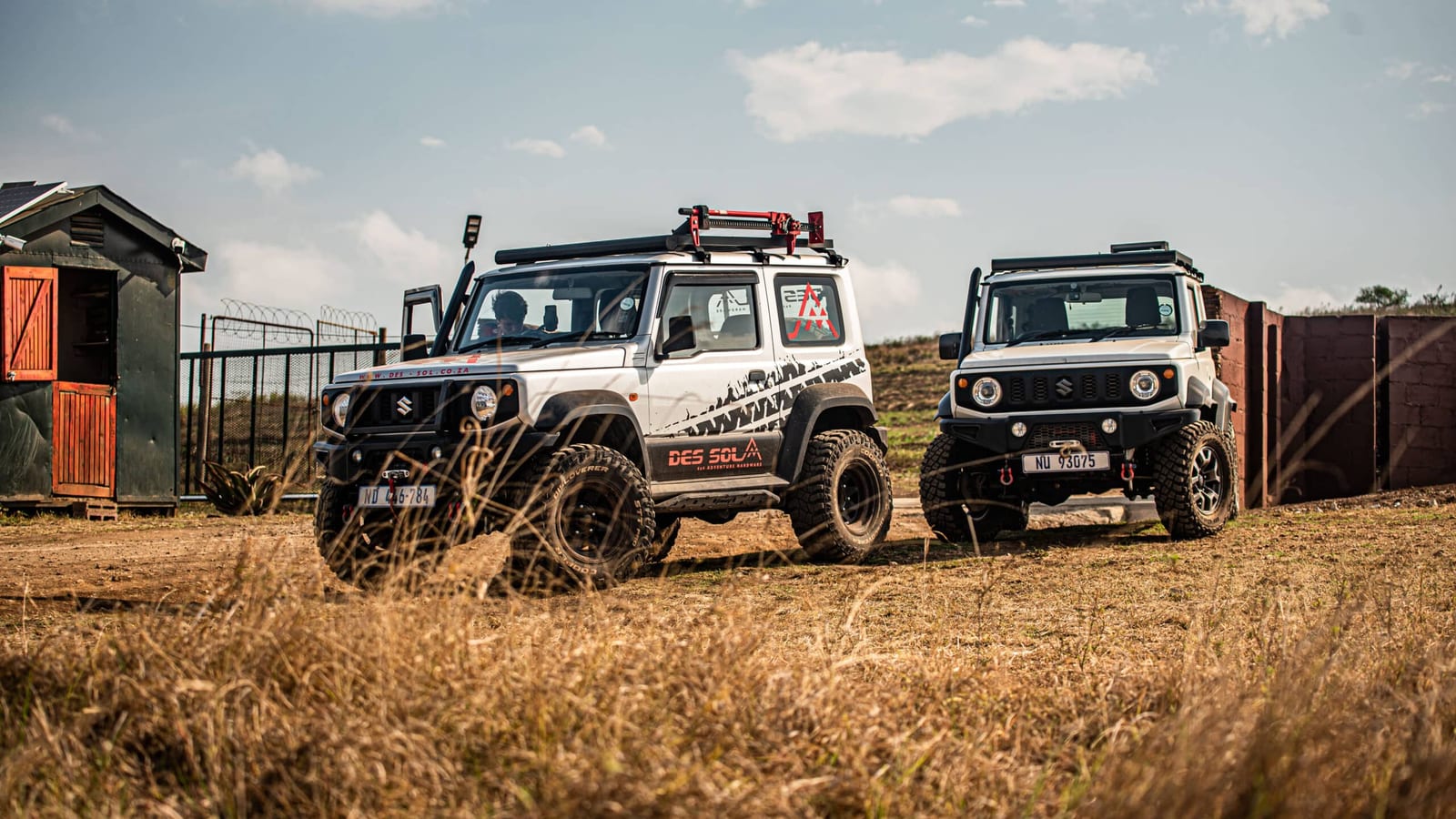
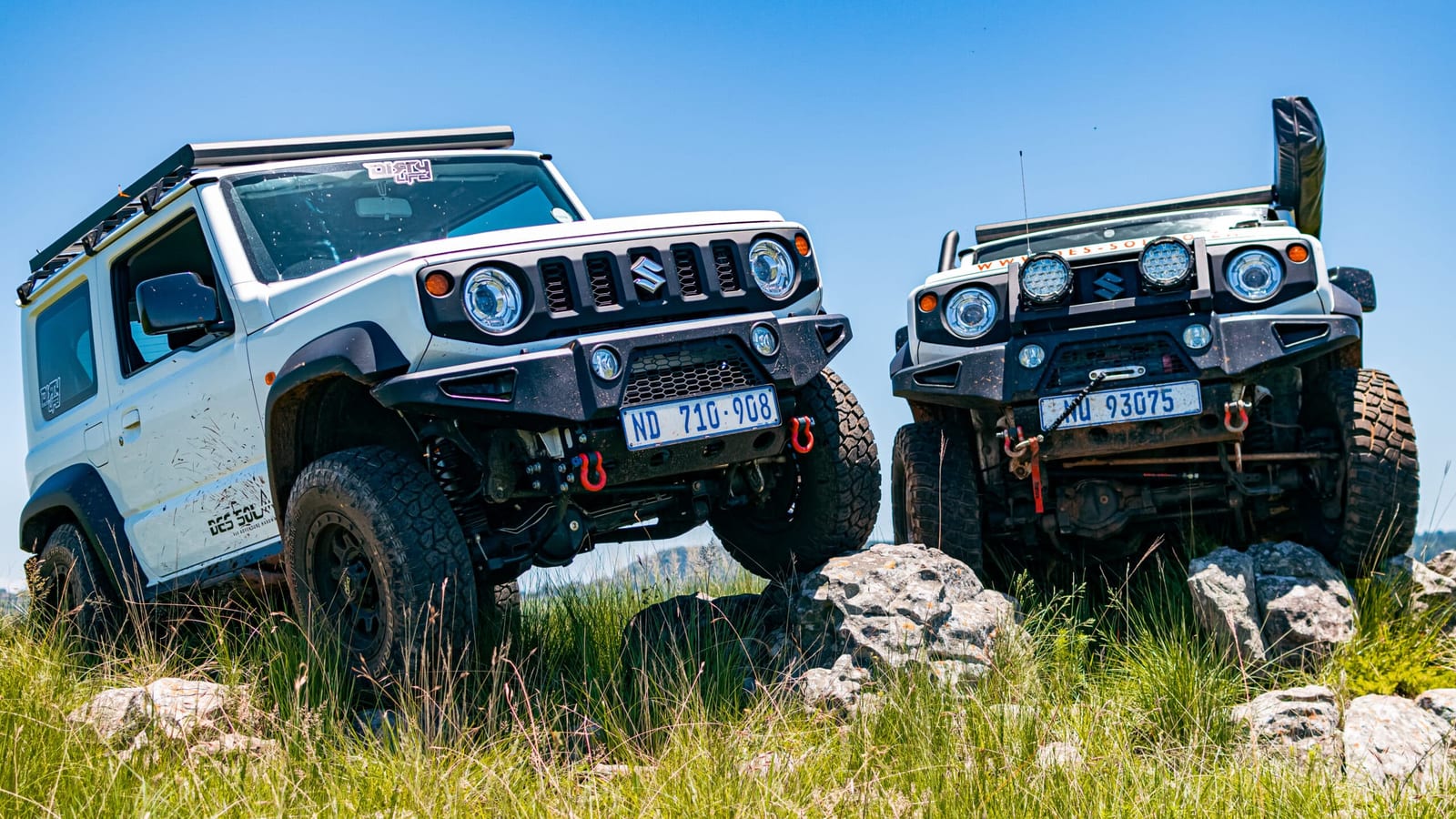
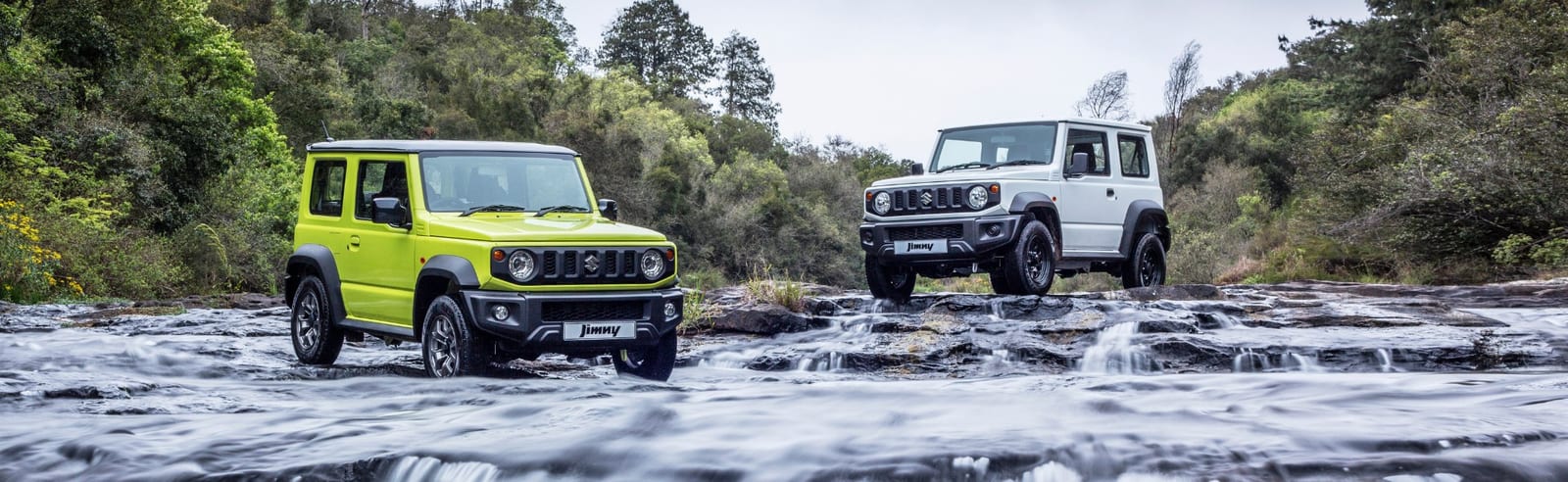
A big thank you to Suzuki Auto South Africa for the showroom and trail photos, and to Des Sol in Pinetown for the picture of both Jimny generations together. Go and see their work.