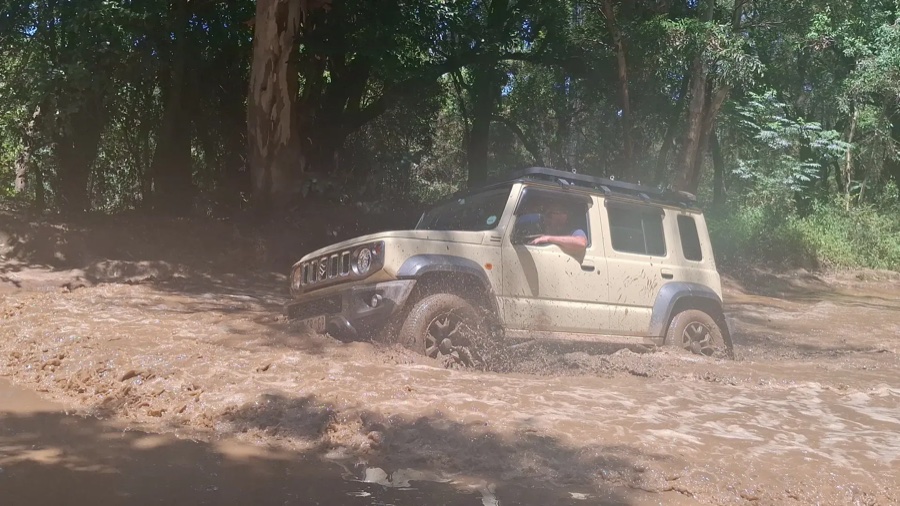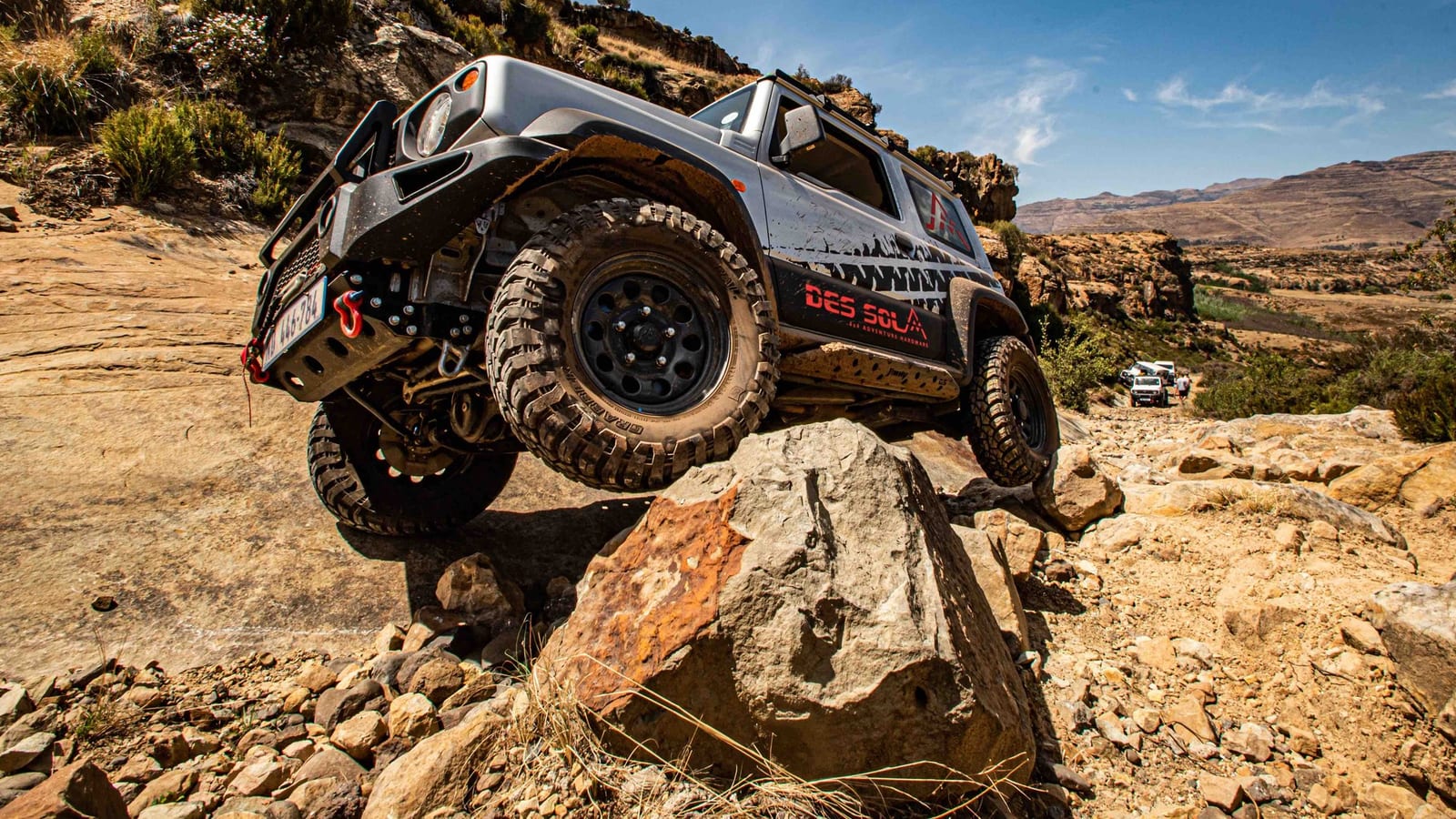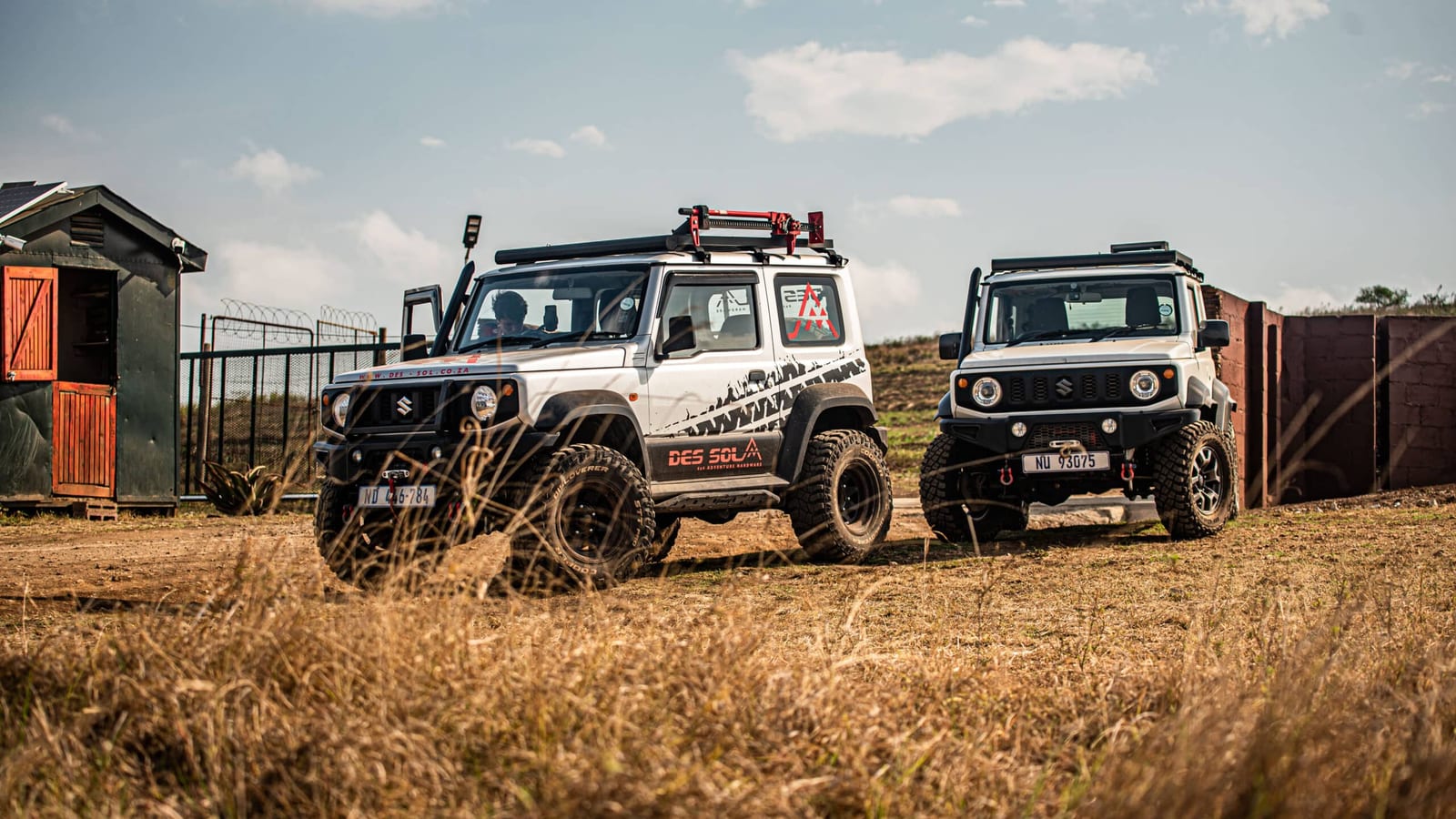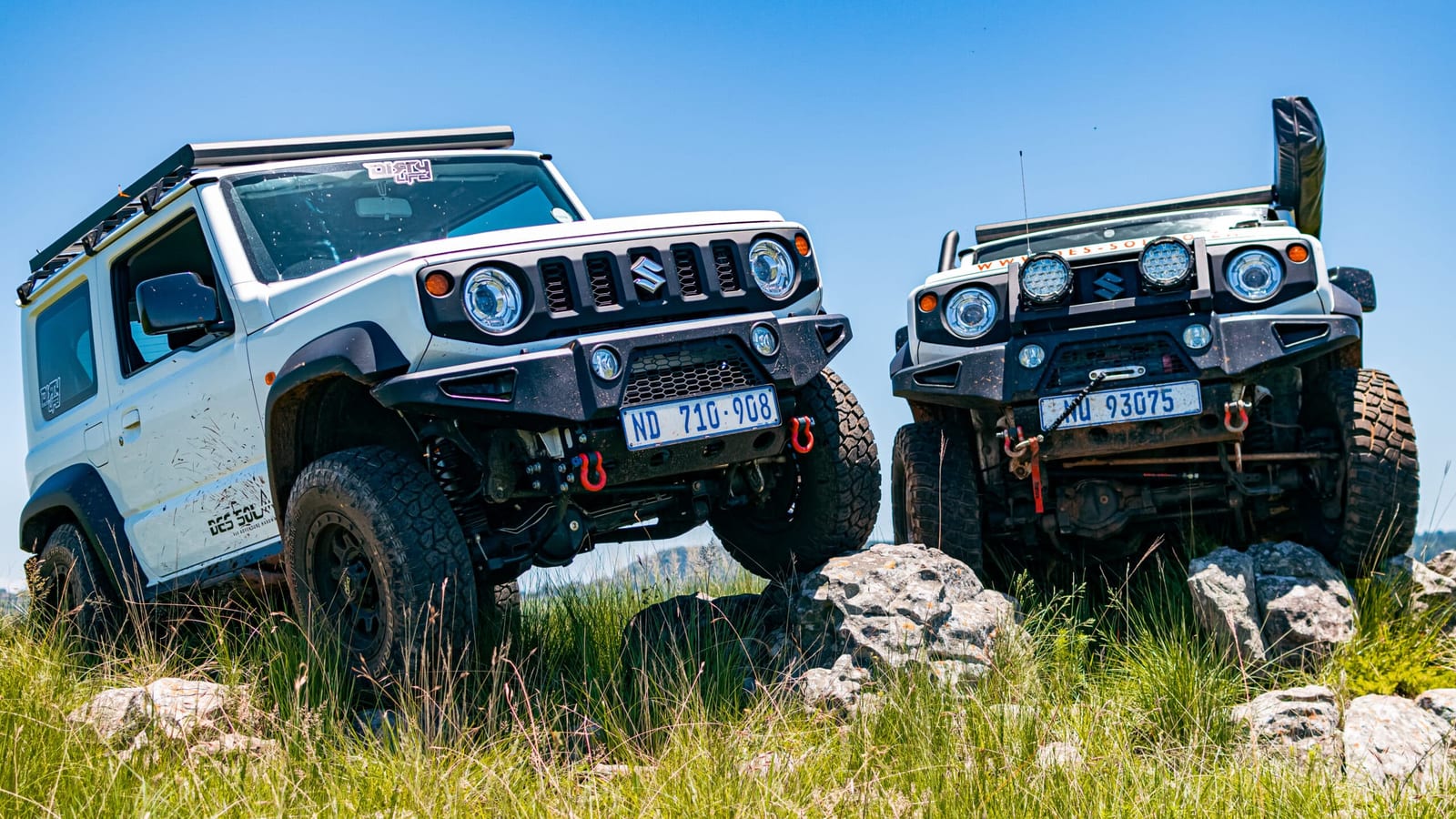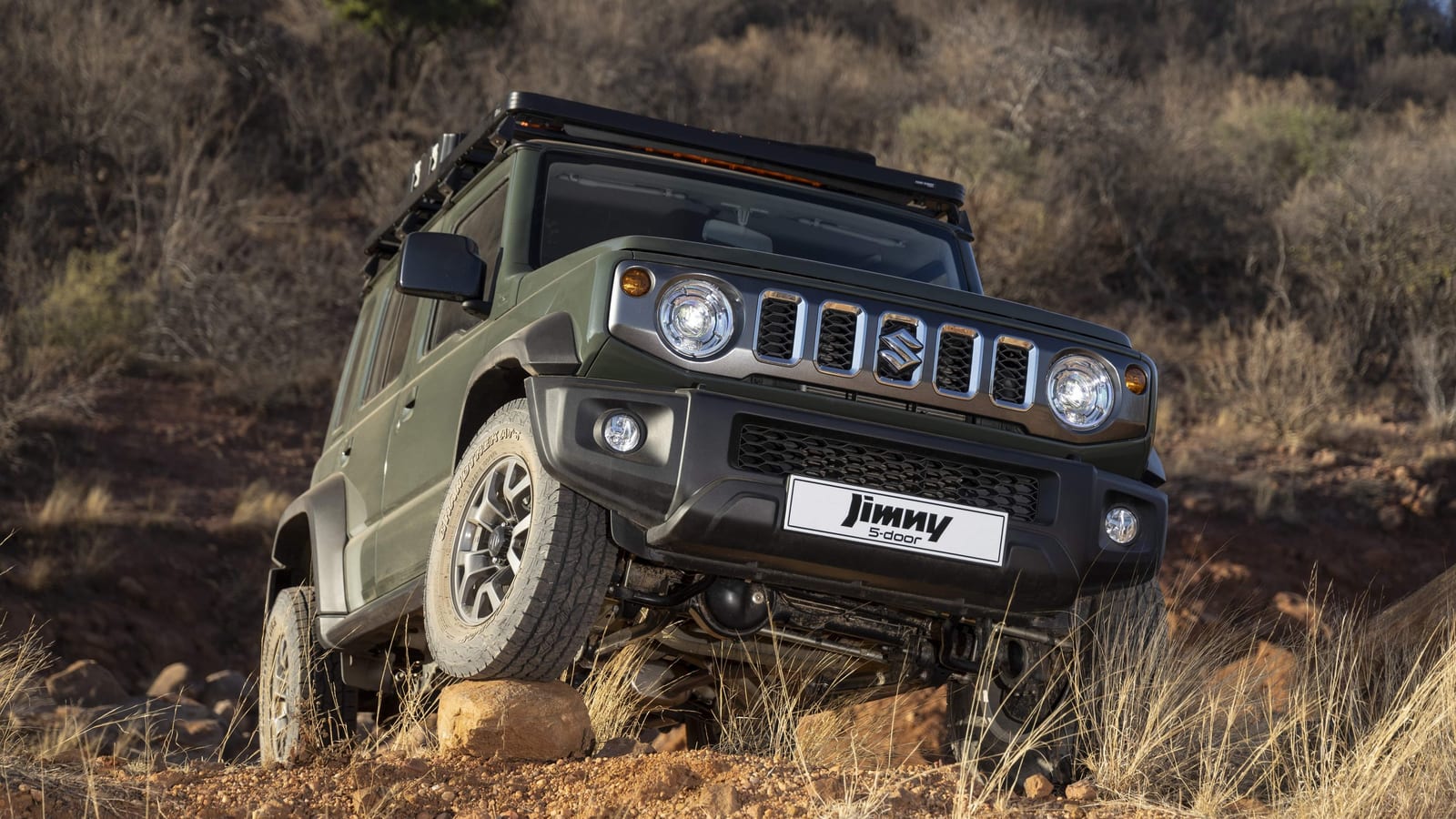
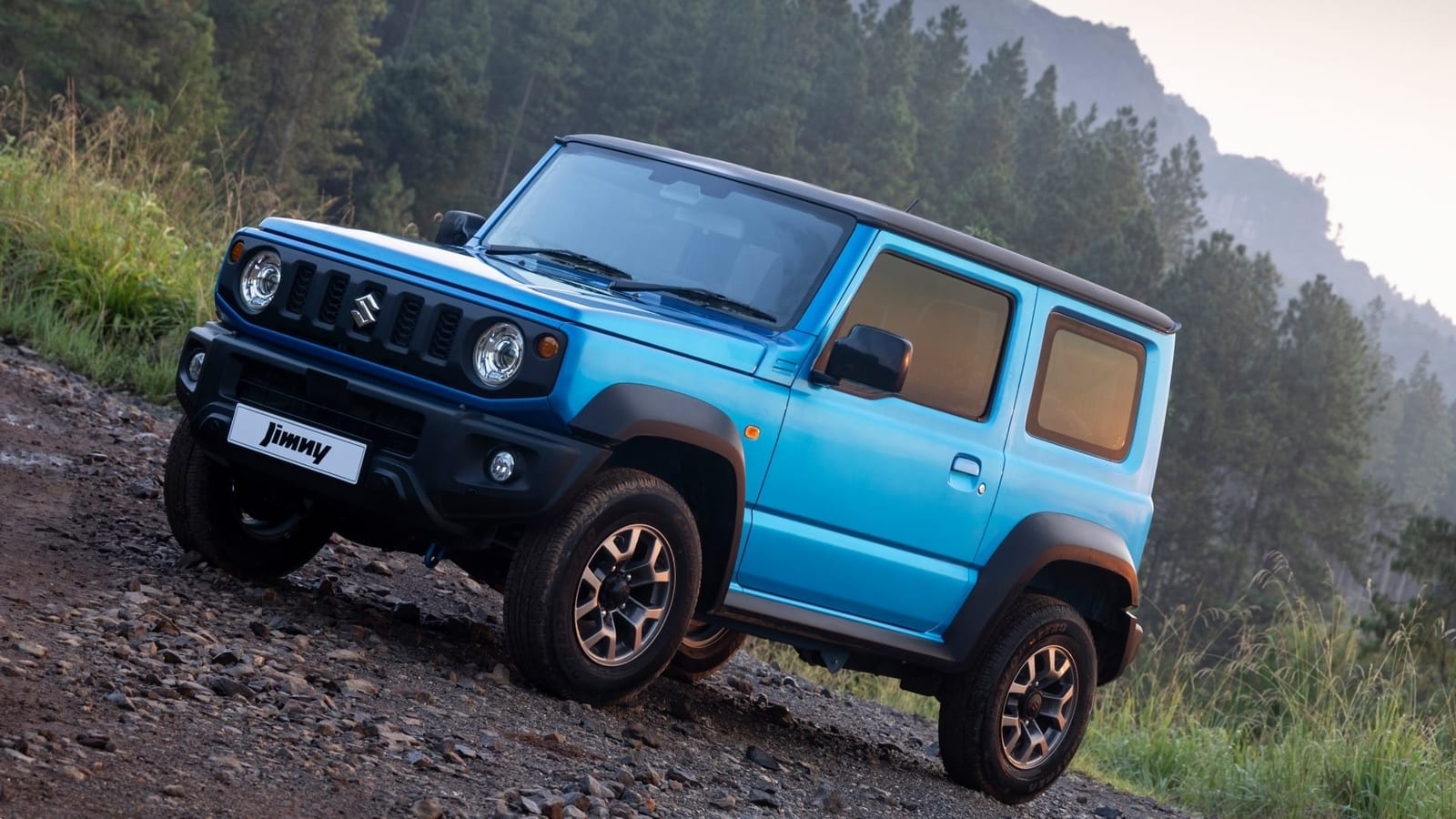
Cover photo: Suzuki Auto South Africa, who shot the current Jimny on its factory wheels, on the kind of gravel it was made for. Thank you, Suzuki SA.
Every current Jimny sold in South Africa leaves the factory on 195/80 R15 tyres. That goes for the 3-door and the 5-door, manual and auto, GL and GLX. When those wear out, the first change is nearly always a set of 215 all-terrains on the factory mags.
This page is the reference card. It gives you every size, what each one needs to fit, and what it does to your speedo, pressures and spare. Keep it open when you phone the tyre shop. For which brand to buy, see our best Jimny tyres guide. For the full 215 or 235 debate, see bigger tyres on a Jimny.
The short answer
- Current Jimny, every body and trim: 195/80 R15 96S on a 15 inch alloy.
- The upsize that needs nothing else: 215/75 R15.
- The build size: 235/75 R15. Plan for a lift and bumper work.
- Pressure on tar: 1.8 bar (180 kPa). It is on the sticker on the door pillar.
- The spare: keep it the same size as the other four.
How to read the size on your sidewall
Every tyre has its size moulded into the side. On a factory Jimny it reads 195/80 R15 96S. Here is what each part means.
| Part | What it means on a Jimny tyre |
|---|---|
| 195 | The tyre is 195 mm wide |
| 80 | The sidewall is 80% as tall as the tyre is wide, so 156 mm |
| R | Radial, the way almost every modern tyre is built |
| 15 | It fits a 15 inch rim |
| 96 | How much weight each tyre may carry: 710 kg |
| S | How fast it may go: 180 km/h |
The car carries its own reference. The sticker on the door pillar gives the size and the pressures Suzuki wants.
American forums talk about tyres in inches, like 30x9.5. Our tyre shops sell metric sizes, so ask for sizes written like these.
Stock sizes, by Jimny
| Jimny | Years | Tyre | Rim | Spare |
|---|---|---|---|---|
| Current 3-door, GLX manual and auto | 2018 on | 195/80 R15 96S | 5.5 x 15 inch alloy | Full-size alloy on the back door |
| 5-door, GL and GLX, manual and auto | 2023 on | 195/80 R15 96S | 5.5 x 15 inch alloy | Full-size alloy on the back door |
| Older Jimny 1.3 | 1998 to 2018 | 205/70 R15 95S | 15 inch | Full-size on the back door |
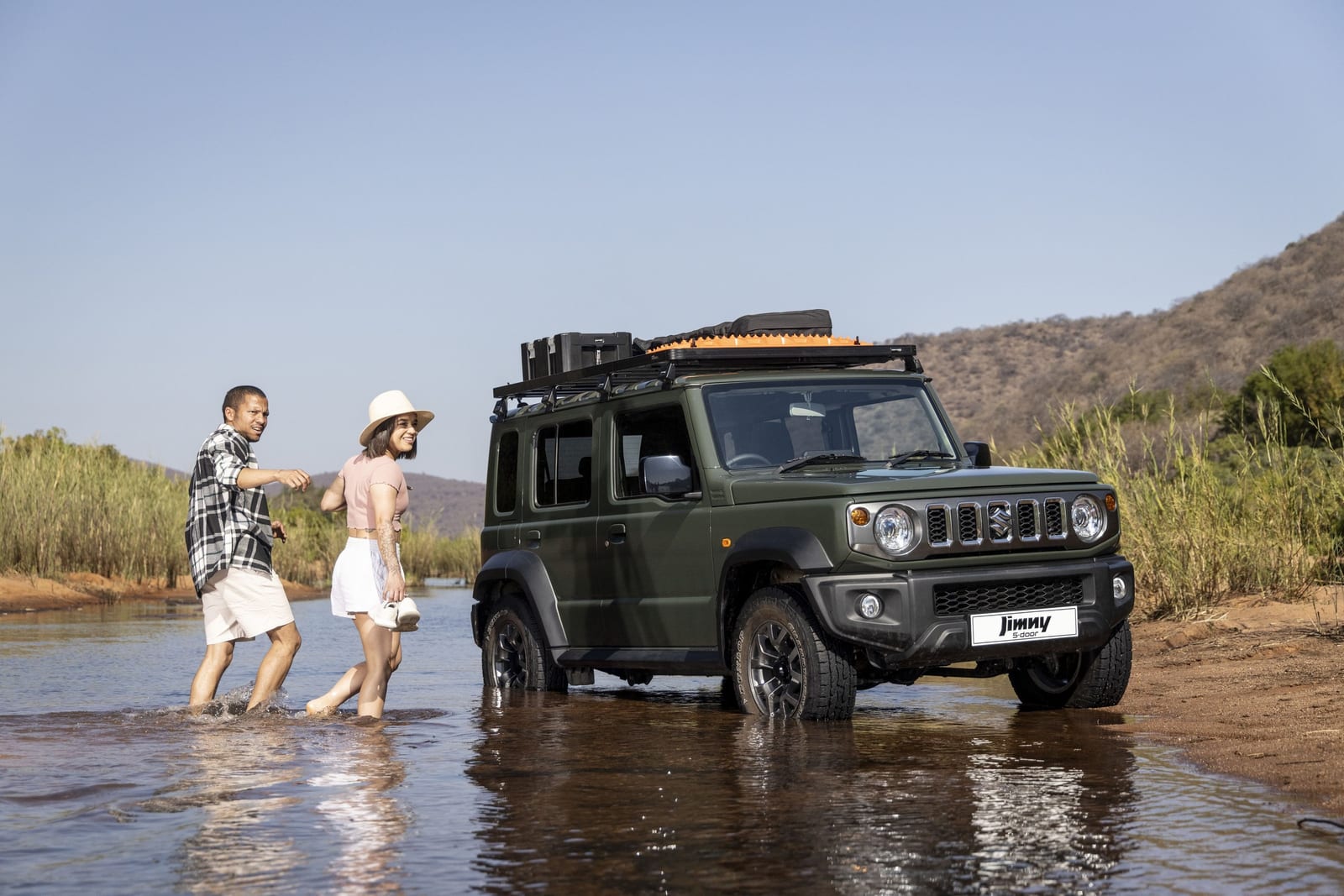
The 5-door is longer and heavier, but it rolls on exactly the same tyre as the 3-door. The cheaper 5-door GL still gets alloy wheels. If you are still choosing a body, our 3-door vs 5-door guide covers the rest.
Why the stock size is hard to shop for
This is why so many owners upsize. In South Africa, 195/80 R15 is mostly a minibus and van size.
We checked Tiger Wheel & Tyre’s online shop on 23 September 2026. It listed 15 tyres in the Jimny’s size. Most were van tyres, built to carry heavy loads. Only 2 had the Jimny’s own 96 load rating.
In 215/75 R15 the picture flips. All 9 tyres listed were proper 4x4 tyres. Every one was rated to carry more than the factory tyre.
| Size | Tyres listed | Cheapest proper 4x4 tyre | Price per tyre |
|---|---|---|---|
| 195/80 R15 (stock) | 15, mostly van tyres | Dunlop Grandtrek AT20, 96S | R1,969 |
| 215/75 R15 | 9, all 4x4 | Hankook Dynapro AT2 Xtreme, 97S | R2,869 |
| 235/75 R15 | 7, all 4x4 | Goodyear Wrangler All-Terrain Adventure, 109T | R3,259 |
| 205/70 R15 (older Jimny) | 16 | Dunlop Grandtrek AT5, 96T | R2,179 |
These are Tiger Wheel & Tyre’s online prices per tyre, VAT included, on the day we checked. Fitting is extra, and they say in-store prices may differ. The accessory stores we compare do not sell tyres, with one exception. JimnyworX in Cape Town sells 215s too, like a General Grabber at R2,720.
Budget for five tyres, not four, because the spare is full size. For brands, see the best tyres guide. For all-terrain against highway tyres, see our all-terrain tyre guide.
The upsizes, and what each one needs
| Size | Diameter | Bigger than stock | Lift? | Front bumper | What owners report |
|---|---|---|---|---|---|
| 195/80 R15 (stock) | 693 mm | 0 | No | Standard | Factory fit |
| 215/75 R15 | 704 mm | 1.5% | No | Standard | Fits the factory rim. Some get a light rub at full lock in reverse |
| 235/75 R15 | 734 mm | 5.8% | Most builders fit about 50 mm | Trimmed or aftermarket | Rubs at full flex on a standard car |
215/75 R15: the easy one
The 215s go straight onto the factory rims, with no lift and no spacers. For most owners nothing rubs.
One Cape Town owner found the front tread catching the plastic corner of the bumper at full lock, mostly when reversing. Another owner had nothing touching at all.
The real win is choice. You get many more proper 4x4 tyres to pick from, and every one can carry more than the factory tyre.
235/75 R15: a build, not a tyre swap
The 235s fit the rim. On a standard car they rub at full flex, which is when one wheel is pushed right up into the arch on rough ground. That is why most builders add a lift of about 50 mm and trim or swap the front bumper.
A lift brings its own jobs, like castor bushes, which put the front wheels back at the right angle after a lift. The spare gets heavier and the speedo drifts further out. Our lift kits guide covers what that costs, and the bigger tyres guide weighs up whether it is worth it.
Wheel spacers, thick plates that push each wheel further out, are part of some 235 builds. Des Sol, who make them, say they add rub at full flex. You do not need them for 215s. See them on our wheels and tyres page.
The older Jimny (1998 to 2018)
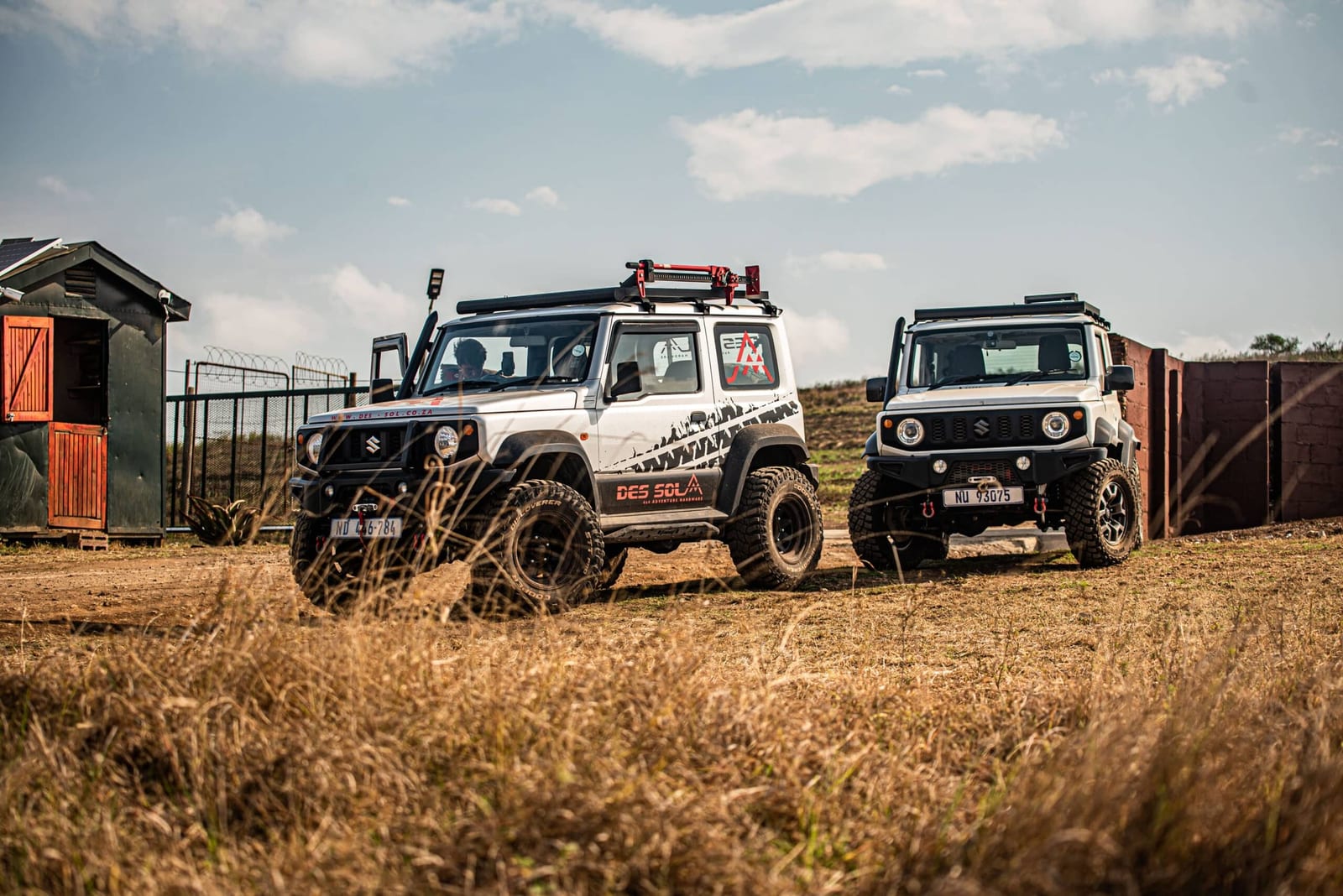
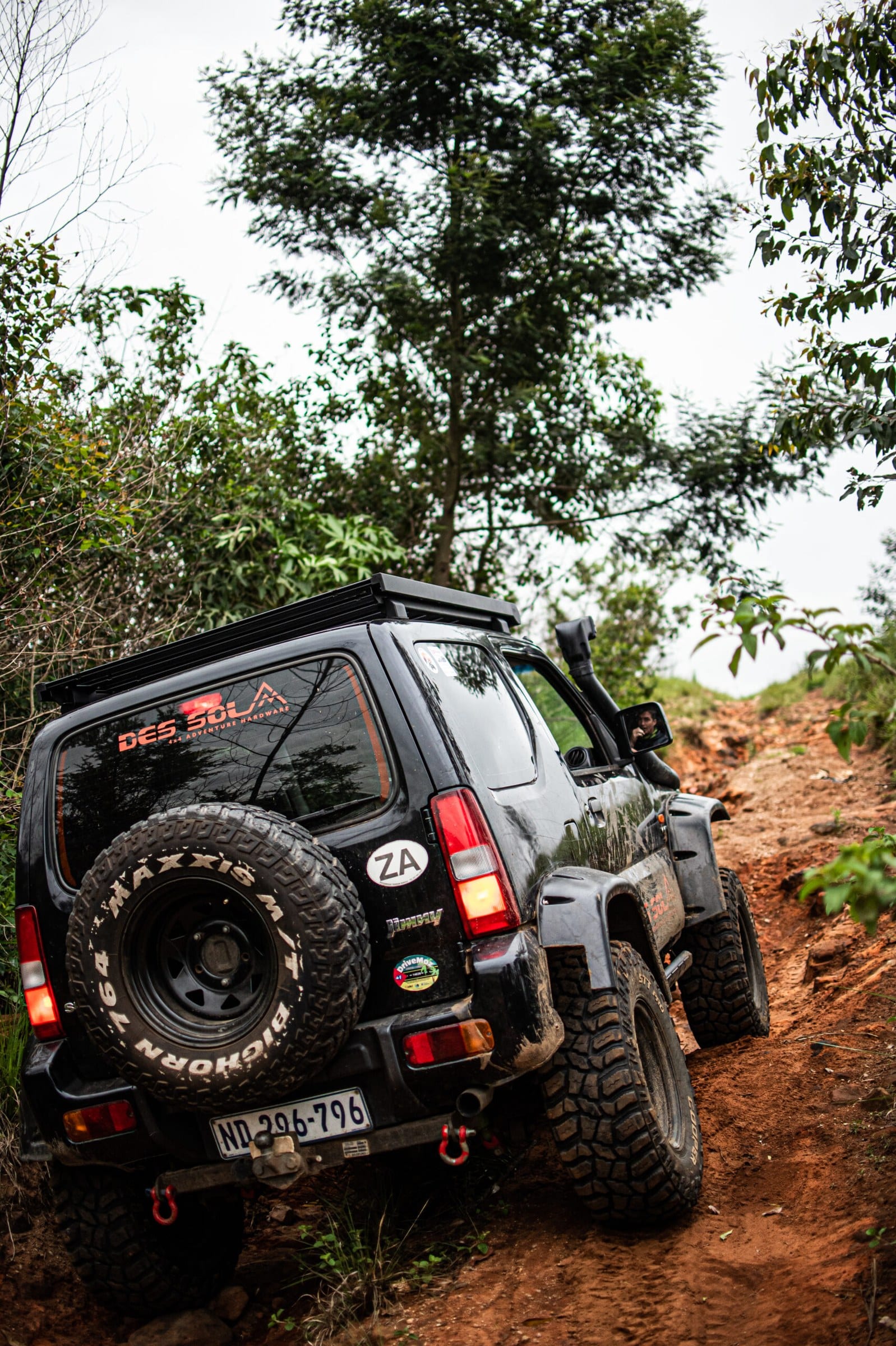
On the older Jimny, 215/75 was the popular step up too. Des Sol says it may catch the front bumper at full lock in reverse. Their fix is to trim about 10 mm off the bumper insert.
Owners who ran 235s on the older car needed a real build. That meant a lift, castor correction and an aftermarket bumper. One owner found the old 1.3 engine struggled to reach 120 km/h.
In-between sizes
Sizes like 215/80 and 225/75 are on the shelf in South Africa. We could not confirm how they fit a current Jimny without a lift, so ask a Jimny specialist before you buy.
Is a bigger tyre legal?
South African law sets no maximum tyre size. There is no rule that caps the size on a given rim. What the law does care about is simple:
- The tyre must be able to carry the load on it.
- You may not drive faster than the tyre is rated for.
- It needs at least 1 mm of tread, and it is illegal once worn down to the little wear bars in the grooves.
- It may not have deep cuts or bulges.
- Your speedometer must work.
Nobody we found could say for sure how testing stations treat 235s, so we will not guess.
Speedometer error, with the maths
A bigger tyre travels further in one turn, so the car goes faster than the needle says. Here is the sum.
A tyre’s height is the rim plus two sidewalls. The rim is 15 inches, and an inch is 25.4 mm, so the rim is 381 mm. On the factory tyre, each sidewall is 80% of 195 mm. That makes 156 mm. Add it up: 381 plus 156 plus 156 gives 693 mm.
Divide the new tyre’s height by the old one, and you have the error. Online tyre calculators use the same sum.
| Size | Diameter | When the needle says 100 | When the needle says 120 | Extra clearance under the axle |
|---|---|---|---|---|
| 195/80 R15 (stock) | 693 mm | 100 | 120 | 0 |
| 215/75 R15 | 704 mm | about 101.5 | about 122 | about 5 mm |
| 235/75 R15 | 734 mm | about 106 | about 127 | about 20 mm |
On 215s you will not notice. On 235s the speed camera reads higher than your dash. The odometer under-counts by the same amount too. So on 235s, a 10,000 km service comes at about 10,580 real kilometres.
Bigger tyres lift only the axles and diffs, not the body.
On the older Jimny, 215/75 is 5.3% bigger than its stock 205/70. Some owners find it brings the old speedo closer to true.
Load index and speed rating, in plain words
The last part of the size, 96S on a factory Jimny, is two codes. The number says how much weight each tyre may carry. The letter says how fast it may go.
| Code | Means | Where you see it |
|---|---|---|
| 96 | 710 kg per tyre | Factory Jimny tyre |
| 97 | 730 kg per tyre | Most 215/75 all-terrains |
| 100 to 101 | 800 to 825 kg per tyre | Some 215s and 235s |
| 104 to 106 | 900 to 950 kg per tyre | Van tyres in the stock size |
| S | Up to 180 km/h | Factory rating |
| T | Up to 190 km/h | Some all-terrains |
| Q | Up to 160 km/h | Mud-terrains and some heavy-duty tyres |
The factory 96 has plenty of room. Four tyres together can carry far more than any Jimny weighs. A fully loaded 5-door may weigh up to 1,545 kg. The 3-door tops out at 1,435 kg. More on weights in our towing and specs guide.
Never go below 96, because the law ties the load on each wheel to what the tyre is rated for. Every 215 all-terrain we found was 97 or more, so an upsize will not lower what your tyres can carry.
A Q tyre is rated to 160 km/h, a step below the factory S. That is still legal. The law only says you may not drive faster than the tyre’s rating. Our national limit is 120 km/h. The 5-door’s claimed top speed is 145 km/h. Tiger Wheel & Tyre’s advice is to match or beat the original speed rating, so weigh that up for yourself.
Pressures on tar and gravel
You will hear this story on every local Jimny forum. A tyre shop fits new tyres and sends the car out at 2.4 bar or more. The door sticker says 1.8.
One Gqeberha owner’s fitter even read a British chart in psi as if it were bar. We use bar and kPa here.
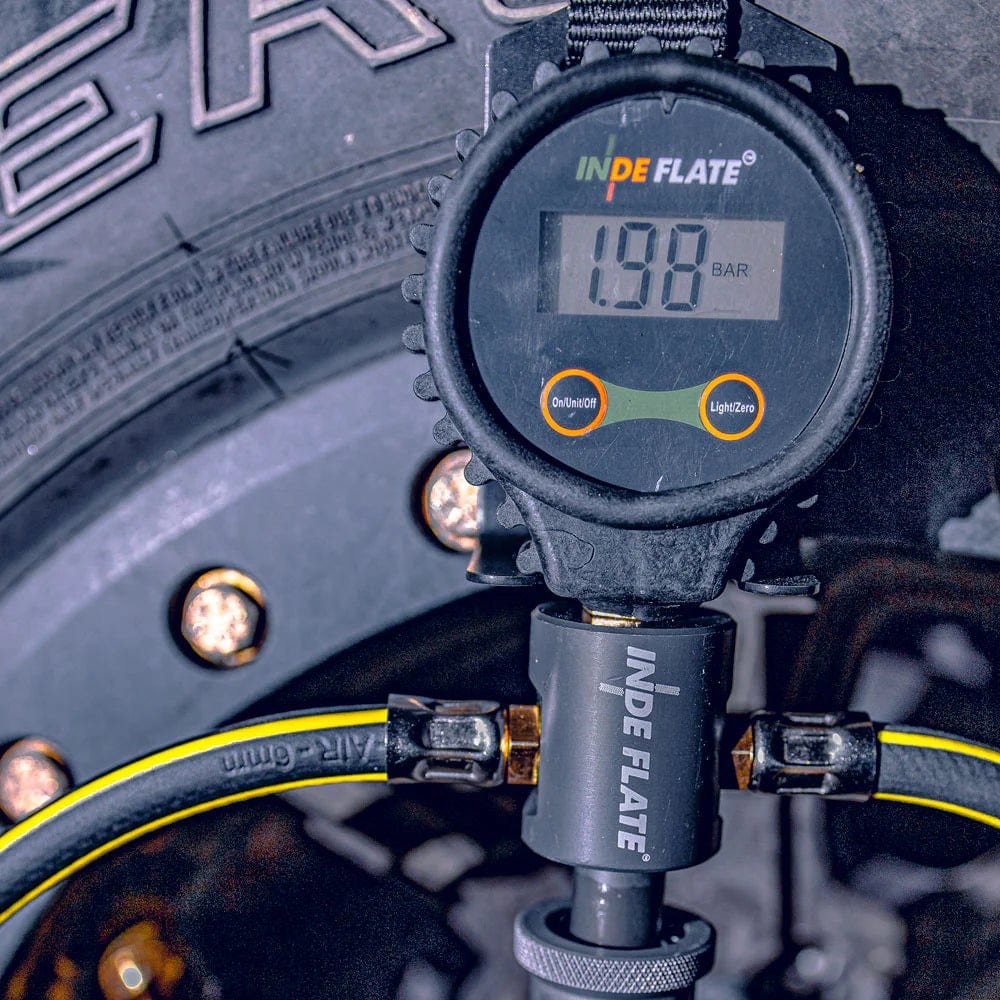
These are the pressures for the current Jimny from Ryno Cloete. He runs JimnyDRIVE, a Jimny driving school endorsed by Suzuki SA. They appeared in 4x4 Afrika in August 2024.
| Where | Factory tyres | 215/75 all-terrains |
|---|---|---|
| Tar, unloaded | 1.8 bar (180 kPa) all round | Same |
| Tar, loaded | 1.8 front, 2.0 rear | Same |
| Long gravel roads | 1.4 bar (140 kPa) | Not given |
| Off-road, slow | 1.2 bar (120 kPa) | 1.0 bar (100 kPa) |
Set pressures cold, before you drive. Pump back up before you hit the tar again. Soft tyres at speed on tar get hot, and hot tyres fail.
Do not go too low. A very soft tyre can come off the rim, and cuts more easily on sharp rock. A deep sidewall cut can make a tyre illegal, not only unsafe. Keep that in mind on the Cederberg shale.
Some owners on 215s run 1.6 bar on tar for a softer ride. That is a personal choice, not advice.
For the older Jimny, check the sticker on your door pillar. The best tyres guide has more on letting air down off-road.
The spare, when you go bigger
Every Jimny on sale in South Africa today carries a full-size spare on a matching alloy on the back door. Keep it the same size as the other four.
In four-wheel drive, the Jimny locks its front and rear axles together. An odd-size spare makes one axle turn at a different speed from the other, and the drivetrain fights itself. A different tread pattern is fine. A different size is not. The best tyres guide goes into more detail.
A 215 spare is only 11 mm taller than stock. So buy five and rotate all five. A 235 spare is 41 mm taller than stock, and heavier to swing on the door.
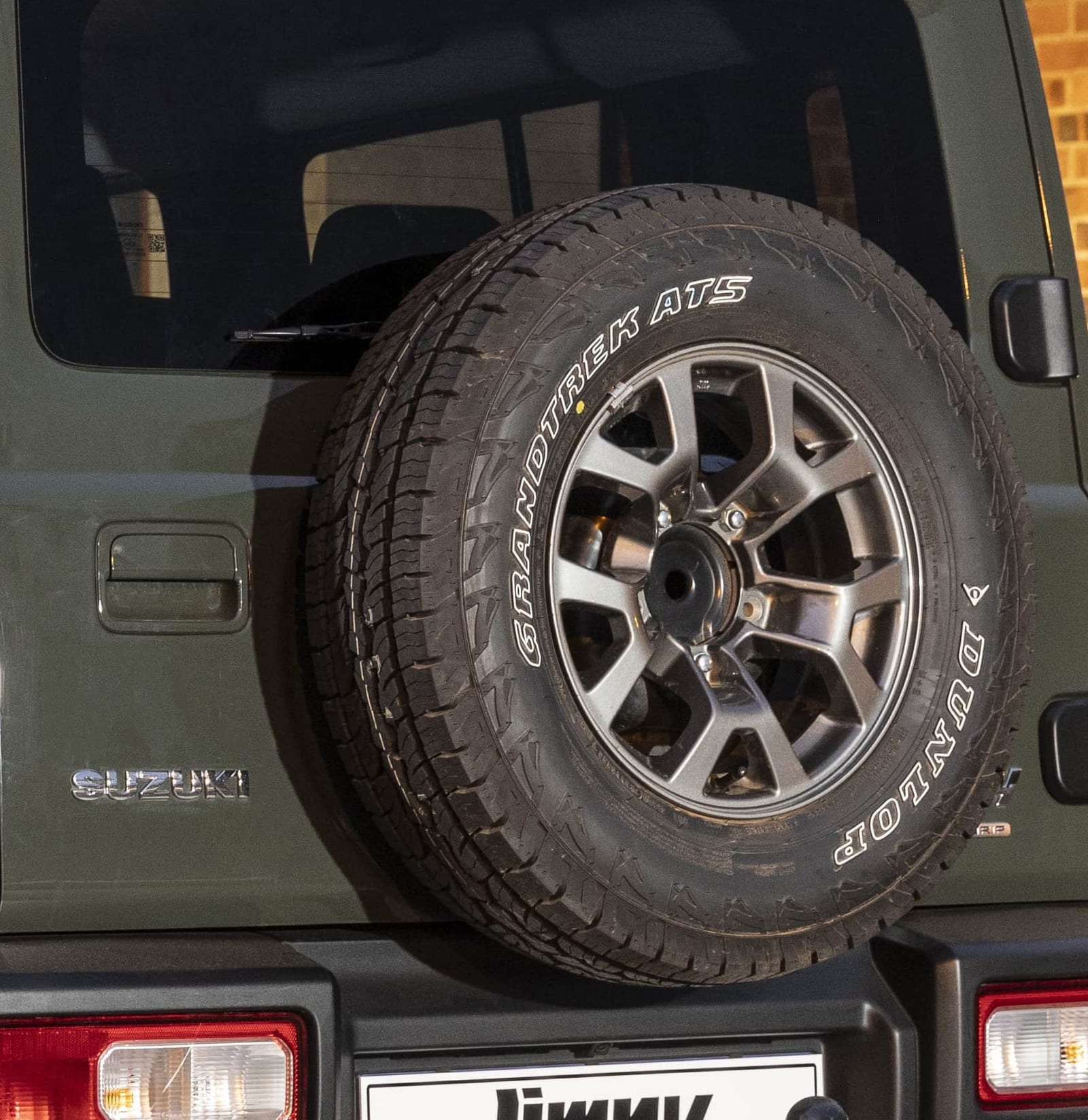
Suzuki’s hard spare cover is made for the factory 195/80 R15 only. Go bigger and you will need a soft or aftermarket cover. The stores we track sell these, but check that each one fits a 215 or 235 before you order.
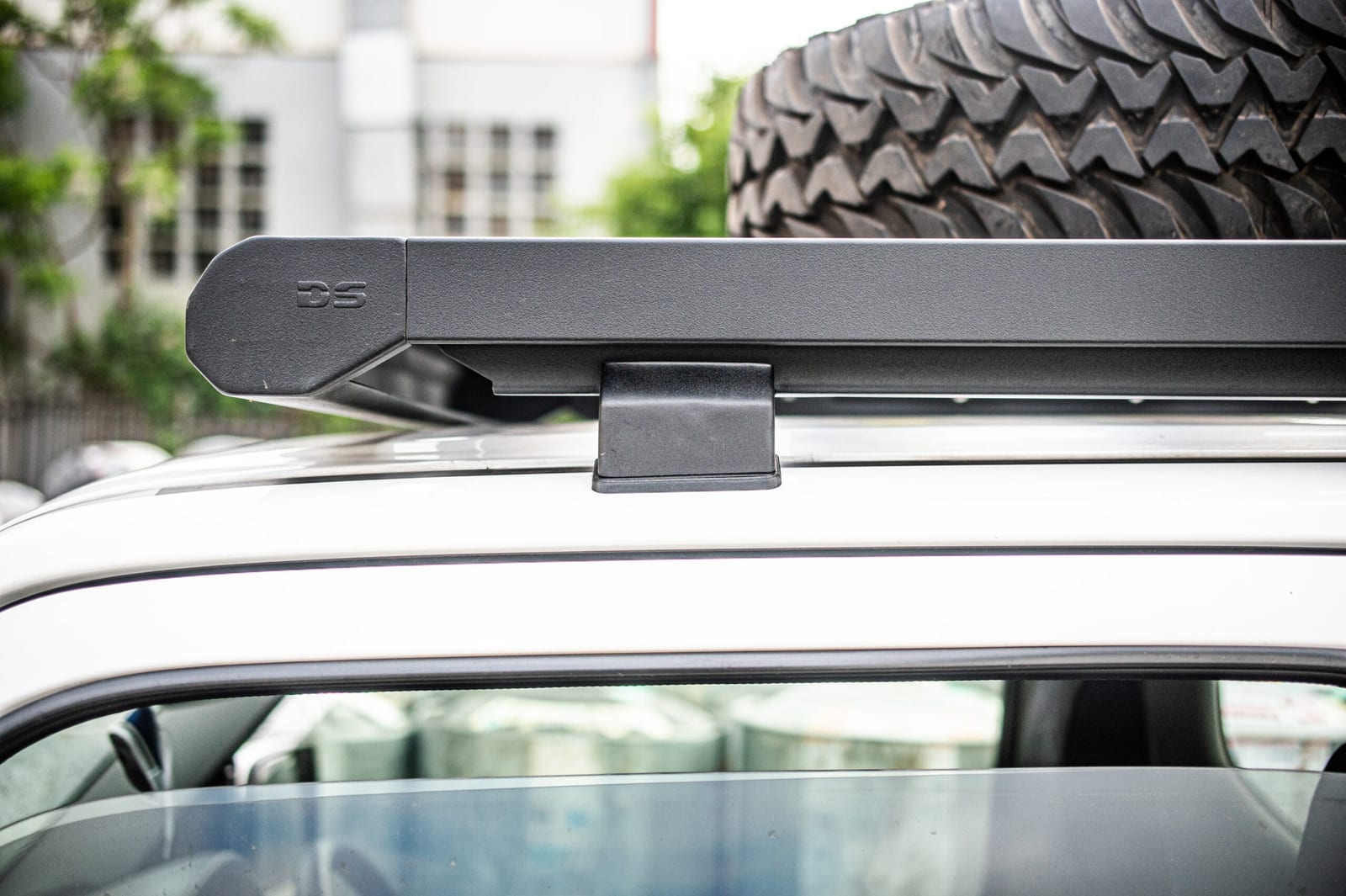
Some owners move a big spare up onto the roof rack. Des Sol makes a spare wheel mount for exactly this. Their own page warns that it puts weight up high. The Jimny’s roof limit is small, so read our rooftop tent guide first.
One more local reality. The spare on the back door is a theft target. One Brackenfell owner had theirs taken in a shopping centre car park, in broad daylight. Fit a good lock nut.
The stores we compare do not sell tyres. They do sell the bits around them, like spare covers and mounts.
Live prices · 4 October 2026
Spare wheel covers and mounts in stock right now
13 in stock at 4 stores today, from R150 to R3 915. Typical price about R2 839.
Which size should you run?
| You | Run | Five tyres, about | Why |
|---|---|---|---|
| Mostly tar, the odd gravel road | 195/80 R15 | R9,800 to R17,000 | Cheapest, no changes, the Suzuki spare cover still fits |
| Gravel weekends: Karoo, Baviaanskloof, Sani | 215/75 R15 all-terrain | R14,300 to R28,200 | Fits the factory rim, far wider tyre choice |
| Building a trail car, with lift and bumper budgeted | 235/75 R15 | R16,300 to R30,900 | More grip and a little clearance, at a cost |
| Older Jimny, keeping it standard | 205/70 R15 | from about R10,900 | Good all-terrain choice in the stock size |
These are five tyres at Tiger Wheel & Tyre’s online prices on the day we checked. They run from the cheapest proper 4x4 tyre to the dearest in each size. Fitting and wheel alignment are extra.
Most owners who leave the tar should stop at 215s. That is the clear view on South African forums. The cautious view is fair too: try the factory tyres first. A Jimny is light enough to float over mud, and the factory tyres’ tall sidewalls soak up potholes and corrugations.
The bottom line
The factory size is 195/80 R15. The 215s suit nearly everyone and need nothing else. The 235s are a build, with a lift and bumper to pay for. Run 1.8 bar on tar, and keep all five tyres the same size.
Shopping for a Jimny to put them on? Browse the Jimnys for sale, or check what yours is worth.
Thank you to everyone whose photos made this guide. Thanks to Suzuki Auto South Africa for the factory shots. Thanks to Des Sol for the builds and the roof-rack spare, and to Indeflate for the gauge. Go and have a look at what they make.